1931 Nobel Peace Prize(1)
Reason for Award
for her leadership of the Women's International League for Peace and Freedom and her pioneering social reforms
Laureates
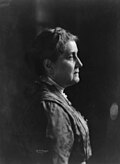
 United States of America
Explanation
Jane Addams taught the world how important it is to solve problems without fighting. In Chicago she opened "Hull House," a place where poor people could learn, get help, and feel safe. She also worked with women around the globe to say "no" to war. Addams showed that the same friendship we practice at school can also exist between nations. Because she never stopped acting for a kinder society, she received the Nobel Peace Prize.
Related Keywords
Women's International League for Peace and Freedom
Founded in 1915, WILPF is the world’s oldest women’s peace NGO. Through national sections it advocates disarmament and human rights, submitting recommendations to the League of Nations and later the UN. Jane Addams served as its first president, linking it to the suffrage movement. Its combination of grassroots campaigning and policy lobbying became a template for modern NGOs. Today it addresses emerging issues such as the peace–climate nexus.
Hull House
Established in Chicago in 1889, Hull House was a settlement that offered immigrants and low-income residents education, health care, legal aid, and cultural activities. Empirical household surveys conducted there underpinned the scientific basis of U.S. social welfare. Programs combining art with civic participation pioneered cultural inclusion. The site now functions as a museum, symbolizing the history of social reform.
social reform
Social reform seeks to solve structural problems such as poverty and discrimination by changing institutions and laws. It arose in response to deteriorating urban conditions during late-19th-century industrialization. Addams valued both direct community support and policy advocacy, using settlement-house data to influence legislation. Her approach shaped professional social work. The concept remains central to building inclusive societies today.
women's suffrage
The movement to secure voting rights for women, achieved in the U.S. by the 19th Amendment in 1920. Addams argued that women’s political participation was essential for peace and social welfare, voicing this at international forums. The victory enlarged the transnational network of women’s NGOs, strengthening WILPF. It is studied as an early case linking political representation and peace.
peace movement
Citizen-led activities aimed at abolishing war and resolving conflicts peacefully. Originating in 19th-century anti-slavery and anti-war societies, the movement diversified in the 20th century to include nuclear disarmament and arms-control campaigns. Addams distinguished herself by mobilizing women and workers, reframing peace from everyday perspectives. Her bottom-up methods influenced international politics and resonate with today’s SDG 16 on peace and justice.
League of Nations
The first permanent international organization, created after World War I to promote collective security and arbitration. Hampered by the absence of major powers and the onset of World War II, it ultimately failed. WILPF lobbied the League for stronger disarmament treaties and minority protections, injecting civil-society perspectives. These experiences fed into the United Nations and shaped mechanisms for NGO participation. Addams’ submissions are often cited in studies of international administration.