1931 Nobel Peace Prize(2)
Reason for Award
for promoting the conclusion of the Kellogg-Briand Pact and for his leadership in the peace movement in the United States
Laureates
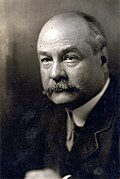
 United States of America
Explanation
Nicholas Butler tried to spread a promise among countries to "never fight." Just like friends agreeing not to quarrel, he wanted nations to settle problems peacefully. Butler was also a university president and taught students why peace matters. Thanks to his work, many countries signed the "Kellogg-Briand Pact" pledging to renounce war. His efforts to protect peace were honored with the Nobel Prize.
Related Keywords
Kellogg-Briand Pact
A 1928 multilateral treaty in which signatory states renounced war as an instrument of national policy. With over 60 parties it became the first international document to "outlaw" war. It influenced Article 2(4) of the UN Charter and was cited as a legal source for the crime of aggression at Nuremberg. The treaty technically remains in force today.
international arbitration
A procedure whereby states submit disputes to a neutral third-party decision. Developed through use of the 1899 Permanent Court of Arbitration in The Hague. Butler viewed arbitration as a practical war-prevention tool and lobbied to embed it in treaty frameworks. Today it is widely used in investment and territorial cases, forming a cornerstone of peaceful dispute settlement.
Columbia University
A private research university in New York City. Butler served as president from 1902 to 1945, expanding faculties and founding international institutes. He opened the campus for global conferences, practicing academic diplomacy. Student exchanges and publishing activities projected U.S. soft power. Columbia remains a key center for international studies.
Carnegie Endowment for International Peace
A think tank founded in 1910 with a donation from Andrew Carnegie, dedicated to international law and peace education. It funds research reports and supports diplomatic conferences. As president, Butler used the Endowment as a lobbying hub, facilitating negotiations for the Kellogg-Briand Pact. It continues to study multilateral order and security as a global think tank, its financial independence allowing policy flexibility.
multilateral diplomacy
A diplomatic mode in which several states cooperate to solve shared problems. It expanded rapidly after World War I through the League of Nations and treaty conferences. The Kellogg-Briand Pact is a classic instance, with signatories accepting a common norm of renouncing war. Butler mediated between delegations to harmonize treaty language. The method anticipates today’s climate and nuclear arms negotiations.
education and peace
The idea that formal and lifelong learning should cultivate peaceful values. Butler argued that universities must foster civic virtue and an international spirit. His lecture series "The International Mind" is regarded as a classic in peace education. UNESCO’s founding notion that "wars begin in the minds of men" draws on this lineage. The concept strongly influences contemporary peace-education curricula.