1934 Nobel Peace Prize
Reason for Award
for his untiring struggle and courageous efforts as Chairman of the League of Nations Disarmament Conference 1931–34
Laureates
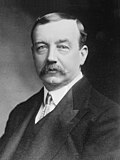
 United Kingdom of Great Britain and Northern Ireland
Explanation
Arthur Henderson worked to help countries talk peacefully instead of fighting. After World War I, many weapons were still left in the world. Henderson became the chairman of the World Disarmament Conference and gathered representatives from many nations to say, “Let’s reduce our weapons.” It was like asking children to put away toy swords so no one gets hurt. The meetings were difficult and slow, but he never gave up and kept the talks going. Because of this hard work, he received the Nobel Peace Prize.
Related Keywords
disarmament
Disarmament is the effort by states to reduce or abolish their weapons and armed forces. It first became a formal international issue at the Hague Peace Conferences in the late 19th century and gained urgency after the horrors of World War I. Besides quantitative cuts, disarmament covers qualitative restrictions and verification mechanisms. The World Disarmament Conference chaired by Henderson was the first major attempt to design such a comprehensive framework. Modern talks on nuclear cuts and conventional arms control still draw on the disarmament concept.
League of Nations
The League of Nations, founded in 1920, was the first universal intergovernmental organization dedicated to collective security and peace. With an Assembly, Council, and permanent Secretariat, it also addressed economic and social issues. The World Disarmament Conference was convened by a League Assembly resolution and administratively ran under its umbrella. The League became ineffective with the onset of World War II, but its experience directly informed the creation of the United Nations. Henderson’s work illustrates both the potential and limits of such organizations.
World Disarmament Conference
Opened in Geneva in February 1932 with about 60 participating states, the conference aimed to craft a multilateral treaty limiting land, sea, and air armaments both quantitatively and qualitatively. Delegates debated the offensive-defensive weapon distinction, inspection schemes, and time-bound reduction rates. As chair, Henderson coordinated plenary and committee work, producing a consolidated “Draft Convention.” Although no treaty was finalized due to worsening politics, the conference generated extensive technical data and precedents for later arms-control talks.
World War I
World War I (1914–1918) was the first global total war, claiming over ten million lives. The destructive power of machine guns, poison gas, and heavy artillery shocked societies and fueled post-war demands for peace and disarmament. Politicians of Henderson’s generation worked to create international frameworks to ensure such devastation would not recur. The war’s lessons spurred moves toward collective security and stronger international law. The Disarmament Conference emerged directly from this historical context.
collective security
Collective security is a system in which an attack on one member state is considered an attack on all, prompting joint action. Enshrined in the League Covenant and later the UN Charter, it stands alongside disarmament as a pillar of peacekeeping. Henderson argued that successful arms reduction required a framework in which nations guaranteed each other’s security, proposing a Mutual Security Protocol. The idea foreshadowed arrangements like NATO and the broader doctrine of collective self-defense. It highlights the complementarity of disarmament and security.