1936 Nobel Peace Prize
Reason for Award
for mediating the conflict between Paraguay and Bolivia
Laureates
 Argentina
Explanation
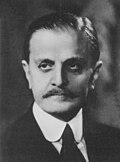
In the 1930s two South-American countries, Paraguay and Bolivia, were fighting over a dry area called the Chaco. Many people were suffering. Carlos Saavedra Lamas, Argentina’s foreign minister, stepped in like a helpful friend. He invited leaders from both countries to sit down and talk instead of shoot. Thanks to his efforts they agreed to stop fighting and start peace talks. By showing that even countries can make up through discussion, he saved many lives and inspired the world.
Related Keywords
Chaco War
Fought from 1932 to 1935 between Paraguay and Bolivia over the Gran Chaco region, the Chaco War was one of South America’s largest modern conflicts. Soldiers suffered from harsh climate and poor logistics, and casualties exceeded 100,000. Although rumors of oil sparked the clash, later surveys found no major petroleum reserves. The war drained both economies and destabilized the broader Latin-American system. Cease-fire and peace were eventually achieved through third-party mediation and mounting international pressure.
Argentine Anti-War Pact
Adopted in Buenos Aires in 1933, the treaty—formally the “Treaty on the Renunciation of War and the Peaceful Settlement of Disputes”—obliged signatories to refuse recognition of territorial gains achieved by force. Drafted chiefly by Saavedra Lamas, it was signed by 15 nations including Brazil and Chile. The pact became a normative precursor to the Organization of American States and is often cited as an antecedent to Article 2(4) of the UN Charter. During the Chaco mediation, the treaty served as the legal basis for creating the Conciliation Commission.
Good Offices
Good Offices is a diplomatic technique in which a third party provides means or venues for belligerents to negotiate without itself making substantive proposals—less intrusive than mediation under international law. Saavedra Lamas began with Good Offices and shifted gradually to full mediation after securing a cease-fire. The approach respected the parties’ sovereign status and allowed face-saving compromise. It remains a model for the UN Secretary-General’s contemporary good-offices missions.
Regional Collective Security
Regional collective security institutionalizes mutual defense and peacekeeping among states in a defined area. In the Americas the Rio Treaty (1947) and OAS exemplify it, with Saavedra Lamas’s Anti-War Pact providing an early blueprint. The concept treats an attack on one as an attack on all, enabling joint sanctions. Lessons from the Chaco case demonstrated that regional bodies can achieve both deterrence and mediation. The idea later influenced NATO in Europe and the African Union.
Cease-Fire Protocol
Signed on 12 June 1935, the protocol ordered an immediate halt to hostilities in the Chaco War and detailed procedures for deploying a monitoring commission, exchanging prisoners, and withdrawing troops. It functioned as an implementing agreement under the Anti-War Pact and was notified to the League of Nations. Compliance was verified on-site by observers from Argentina, Brazil, Chile, and Peru. Observed adherence reduced mutual distrust and eased the eventual 1938 final peace treaty. The protocol is regarded as innovative for opting for comprehensive management rather than piecemeal arrangements.
Non-Recognition Principle
The non-recognition principle holds that the international community will not accept territorial or other gains achieved by force as lawful. After the 1932 Stimson Doctrine it was formally regionalized in Saavedra Lamas’s Anti-War Pact. During the Chaco conflict the principle denied belligerents the prospect of legitimizing battlefield gains, nudging them toward a cease-fire. Post-1945 it became universal through Article 2(4) of the UN Charter and the development of the crime of aggression. It remains central in debates over Crimea, the South China Sea, and other disputes.
Prisoner Exchange
Prisoner exchange is the humanitarian repatriation of captured soldiers after or during conflict. The Chaco cease-fire protocol mandated a full exchange within 90 days, inspected by the International Committee of the Red Cross. Early repatriation reduced domestic tensions and bolstered support for continued peace talks. Modern international law regulates the practice in the 1929 Geneva Convention and, today, the Third Geneva Convention. It exemplifies a mechanism that aligns humanitarian concerns with security interests.
International Supervision Commission
An international supervision commission is a multinational team deployed to verify cease-fire compliance on the ground. In the Chaco case Argentina, Brazil, Chile, and Peru sent military and civilian experts. The commission patrolled the front line, witnessed arms withdrawals, and processed complaints from both sides. Regarded as an early regional prototype of peacekeeping, it inspired later OAS observer missions and the UN Truce Supervision Organization (UNTSO). Weekly public reports provided transparency that deterred renewed fighting.