1937 Nobel Peace Prize
Reason for Award
for his tireless effort in support of the League of Nations, disarmament and peace
Laureates
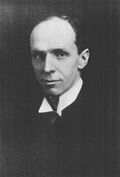
 United Kingdom of Great Britain and Northern Ireland
Explanation
After World War I, countries formed a kind of club called the League of Nations so that another big war would never happen. Robert Cecil worked hard to make this club function by bringing nations together and writing fair rules. He believed that if countries talked, they would not have to fight. Even when he was sick, he still went to meetings to help. Because of this great effort, he received the Nobel Peace Prize.
Related Keywords
League of Nations
Established in 1919 after World War I, it was the first permanent international peace organization. Based on collective security and arbitration principles, it is regarded as the forerunner of the United Nations.
Disarmament
The reduction or elimination of national armaments and military forces. It lowers the threshold for armed conflict and became a core concept of peace movements.
Collective security
An arrangement in which member states jointly oppose aggression. Institutionalized in Article 16 of the League Covenant and Chapter VII of the UN Charter, it forms the theoretical backbone of aggression deterrence.
Kellogg–Briand Pact
The 1928 treaty renouncing war as an instrument of national policy. Though weakly enforced, it was groundbreaking in establishing a norm that declared war illegal.
Geneva Disarmament Conference
Multilateral disarmament talks held from 1932. Cecil and others proposed banning offensive weapons, but great-power disagreements led to failure.
Paris Peace Conference
The 1919 conference that set WWI peace terms and negotiated the League’s creation. Cecil, on the British delegation, promoted a strong international organization.
Robert Cecil
British lawyer-politician, a principal architect of the League of Nations and the 1937 Nobel Peace Prize laureate.
Peace diplomacy
A diplomatic stance that seeks to resolve conflicts through negotiation and international institutions rather than force. Cecil’s work is considered a classic example.