1945 Nobel Peace Prize
Reason for Award
for his pivotal role in drafting the United Nations Charter and his indefatigable work for international understanding
Laureates
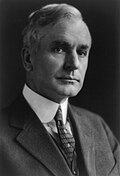
 United States of America
Explanation
Cordell Hull was an American statesman who wanted to create a way for the world to stop fighting. During World War II he imagined a big classroom where countries could talk together—this became the United Nations. Hull led the work of writing the United Nations Charter, the rulebook for that classroom. Thanks to the UN, nations can meet and discuss problems instead of going to war. His hope for peace earned him the Nobel Peace Prize.
Related Keywords
United Nations Charter
Adopted at the San Francisco Conference in June 1945, the United Nations Charter is the founding treaty of the UN. Composed of a Preamble and 19 chapters with 111 articles, it sets out three pillars: peace and security, human rights, and socio-economic development. By codifying mechanisms such as the Security Council veto and collective self-defence, it corrected League of Nations weaknesses. It remains the multilateral treaty with the largest number of parties and has never been formally amended. Hull played a decisive role in integrating draft texts and refining legal language.
Dumbarton Oaks Conference
Held in Washington, D.C., from August to October 1944, the Dumbarton Oaks Conference gathered experts from the US, UK, USSR, and China. It negotiated the blueprint of the United Nations, covering Security Council powers, General Assembly functions, and the procedure for appointing the Secretary-General. Hull led the U.S. delegation and introduced the veto as a compromise in power allocation with the Soviet Union. The meeting’s ‘Proposals’ became the official draft for the 1945 San Francisco Conference. Scholars cite it as a classic case of the prenegotiation phase in institutional formation.
Moscow Conference of Foreign Ministers (1943)
In October 1943 the foreign ministers of the US, UK, USSR, and China met in wartime Moscow to discuss postwar order. Hull proposed the necessity of a ‘general international organization,’ marking the first official document that recorded a joint four-power plan. The conference also adopted decisions on Italy’s surrender administration and the declaration for Austria’s re-independence, reinforcing Allied cohesion. It constituted a breakthrough by establishing a formal diplomatic track toward creating the United Nations. Historiographically, it is seen as the starting point of transforming a wartime alliance into a peacetime institution.
collective security
Collective security is a framework in which multiple states jointly sanction an aggressor, reducing individual arms races and maintaining peace. The League of Nations was the first attempt, but unanimity rules and non-compliance hampered effectiveness. The UN Charter concentrated enforcement authority in the Security Council, greatly improving functionality. Hull embedded the concept within U.S. diplomatic doctrine, helping overcome domestic isolationism. Today regional bodies such as NATO and the OSCE play complementary collective-security roles.
multilateralism
Multilateralism denotes a diplomatic stance in which several states, acting on an equal basis, create rules and tackle common problems. Hull is regarded as a leading figure who shifted U.S. foreign policy from bilateral deals to multilateral cooperation. His Reciprocal Trade Agreements Act and UN project operationalized this principle. Multilateralism is praised for combining normative equality with practical efficiency, fostering long-term institutional stability. In the 21st-century challenges of climate change and pandemics, the approach is being reassessed.
Hull Note
The Hull Note was a memorandum presented by Secretary of State Cordell Hull to Japan on 26 November 1941. It demanded a full Japanese withdrawal from China and termination of the Tripartite Pact, which Japan rejected. Often labeled the final ultimatum before Pearl Harbor, recent studies argue it still left room for further negotiations. Historically it is pivotal as a direct cause of the Pacific War and showcases Hull’s firm and principled diplomacy. Compared with the UN project, it reveals Hull’s consistent strategy spanning wartime termination and postwar peace architecture.