1946 Nobel Peace Prize(1)
Reason for Award
as Honorary International President of the Women's International League for Peace and Freedom
Laureates
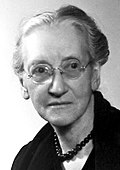
 United States of America
Explanation
Emily Greene Balch spent her whole life trying to stop wars and make the world peaceful. She led a big group called the Women’s International League for Peace and Freedom, where mothers and women from many countries worked together. The group asked governments to solve arguments by talking and to reduce weapons. Ms. Balch also wrote books and newspaper articles to explain why peace is important in simple words. Because she cared more about people’s safety than about money, she was awarded the Nobel Peace Prize.
Related Keywords
Women’s International League for Peace and Freedom (WILPF)
Founded in 1915, WILPF is the world’s oldest feminist peace NGO. It linked the women’s suffrage movement with anti-war activism and consistently put disarmament and human-rights issues on the agendas of both the League of Nations and the United Nations. By bringing grassroots research reports to international conferences, it influenced the formation of international law with a gender perspective. During the Cold War it joined nuclear-disarmament campaigns and today has branches in more than 40 countries. Balch, as Honorary International President, was a central figure who shaped its early strategy and theory.
Disarmament
An effort to reduce or abolish the weapons and military forces that states possess. After World War I, Balch argued that disarmament had to be linked with economic reconstruction. Her ideas influenced debates that led to treaties such as the Washington Naval Disarmament Treaty. While disarmament can enhance international security, it may also affect employment and balance-of-power dynamics, so she insisted it be integrated with comprehensive economic and social policies. This perspective anticipates today’s SDG 16 on peace, justice, and strong institutions.
Pacifism
A doctrine that rejects the use of armed force on moral and political grounds and limits conflict resolution to non-violent means. Balch was not an absolute pacifist; she was a conditional pacifist who called for an institutional framework that could intervene to stop gross human-rights violations. She emphasized achieving not only “negative peace” but also “positive peace,” meaning the establishment of social justice. This became a core concept in later peace studies and influenced the UN’s sustainable-development agenda. Her approach provided a prototype for the advocacy methods used by many of today’s international NGOs.
Internationalism
An ideology that seeks peace and prosperity through cross-border cooperation and shared rules. Balch advocated a multilayered internationalism in which civil-society actors could intervene in intergovernmental frameworks. Her theory is considered a forerunner of global-governance studies and research on transnational social movements. WILPF’s activities are a rare case in which a non-state actor shaped norms within League of Nations committees. The lineage of this approach can be traced in post-Cold War NGO diplomacy and climate-change negotiations.
Social Justice
A concept that aims to correct inequality by ensuring equal opportunities in welfare, education, labor, and protection of human rights. Balch placed social justice as a prerequisite for peace and advocated the protection of immigrants and the improvement of labor conditions. Using field research, she argued that economic inequality breeds war. Her ideas influenced the creation of the International Labour Organization (ILO) and early refugee-protection policies. The modern “Human Security” framework in peace-building programs carries forward Balch’s social-justice perspective.
League of Nations Minorities Committee
A body set up after World War I to monitor the protection of ethnic and religious minorities. Balch strongly supported its creation and helped draft its early reports. The committee conducted treaty monitoring and field missions, making minority issues visible on the international agenda. Though often criticized as insufficient, it marked the beginning of institutionalized international human-rights protection. It is regarded as a forerunner of today’s UN Human Rights Council special-rapporteur system.
Structural Violence
A situation in which people’s lives and health are harmed by institutions or social structures even without direct physical violence. Balch treated poverty, discrimination, and oppression as forms of violence comparable to war and sought to make them visible through statistics and case studies. This was an embryonic discussion that predated Johan Galtung’s formal definition. Her claim that policies for peace must address structural violence became a theoretical foundation for contemporary development aid and human-rights diplomacy. It is one reason why poverty and educational inequality are now included as peace indicators in the SDG framework.