1946 Nobel Peace Prize(2)
Reason for Award
as President of the Young Men's Christian Association
Laureates
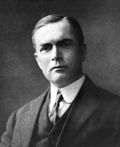
 United States of America
Explanation
John Mott wanted young people everywhere to help each other and be friends. He was a leader of the YMCA, using sports and camps to build friendship. He organized letters and meetings across borders so youths could learn about each other. During World War I he prepared food and libraries for soldiers and prayed for the war to end quickly. For these efforts he received the Nobel Peace Prize.
Related Keywords
Young Men's Christian Association (YMCA)
A Christian youth organization founded in London in 1844. Its mission is to nurture “healthy spirit and body” through exercise, learning, and service. Mott expanded its international branch, and during World War I the YMCA provided libraries, sports, and postal services to troops. This reduced soldier stress and hostility, making the organization a pioneer in international humanitarian assistance. It now operates in more than 120 countries, involved in sports diplomacy and disaster relief.
World Student Christian Federation (WSCF)
An international student organization founded in 1895 that offers a platform for students of faith to address social issues. Mott was elected its general secretary at the founding assembly and introduced an activity model integrating mission, social service, and peace education. In the early twentieth century it expanded to Asia and Africa, giving students under colonial rule an international voice. It is regarded as an incubator for many contemporary NGO leaders.
International Volunteer Movement
A trend in which people cross borders to perform unpaid social-contribution activities. Mott’s student-deployment programs are regarded as an early form of this movement. He mobilized students for POW support and disease-prevention work, promoting multicultural cooperation and mutual understanding. After World War II this evolved into schemes such as UN Volunteers and Japan’s JOCV, greatly influencing today’s training of international-cooperation personnel. Volunteer experience is valued for developing soft skills and global citizenship.
Ecumenism
A movement aiming for cooperation and unity among Christian denominations. Mott emphasized common social service over theological differences, creating an entry point for peace-building. His efforts led to the formation of the World Council of Churches (WCC), institutionalizing inter-church cooperation. Ecumenism was applied to East-West dialogue during the Cold War and to North-South issues, becoming an important model for faith-based peace diplomacy. Current SDG discussions of religious-organization cooperation are rooted in this tradition.
Humanitarian Diplomacy
The act of NGOs and religious groups negotiating or mediating humanitarian issues in place of governments. Mott’s YMCA filled gaps in wartime diplomacy by mediating POW exchanges and postal delivery. This helped secure minimum human-rights protection even between enemies. Humanitarian diplomacy is now a key role for the Red Cross and Médecins Sans Frontières, and Mott’s work is one of its origins. It exemplifies how informal channels can complement formal negotiations.
Sports Diplomacy
A method that fosters trust and dialogue between nations or groups through sport. The YMCA’s basketball and football matches at the front reduced hostility among soldiers. Mott treated sport as a “common language” capable of overcoming cultural differences. Today the Olympics and FIFA World Cup are used for international rapprochement, but the YMCA’s grassroots initiatives were a pioneering example. Sports diplomacy is considered an important case study in soft-power research.
Faith-Based Organization (FBO)
A collective term for organizations that undertake social service rooted in religious values. Mott’s YMCA and WSCF are classic examples, demonstrating an operational model that integrates relief and mission work. FBOs’ deep community presence and trust are strengths in post-conflict resilience building. International agencies are strengthening partnerships with FBOs, making the religion-development nexus an important research field. Mott’s experience provides foundational data for studies of FBOs.