1957 Nobel Peace Prize
Reason for Award
for his crucial contribution to the deployment of a United Nations Emergency Force in the wake of the Suez Crisis
Laureates
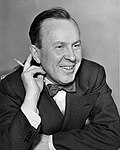
 Canada
Explanation
Mr. Lester B. Pearson was a Canadian diplomat who helped countries stop fighting. In 1956, during the Suez Crisis, nations argued and fought over control of the Suez Canal in Egypt. Pearson suggested to the United Nations, "Let us send soldiers from neutral countries to calm the situation." This group became the United Nations Emergency Force, standing between the armies and stopping the shooting. Because of this idea, a big war was avoided and many lives were saved. Pearson’s plan showed the world how important it is to solve problems with cooperation, leading to his Nobel Peace Prize. The basic idea still lives on today in UN peacekeeping missions.
Related Keywords
United Nations Emergency Force
The United Nations Emergency Force (UNEF) was the UN’s first armed peacekeeping force, created to defuse the 1956 Suez Crisis. Ten non-belligerent nations, including Canada, India and Nordic states, contributed infantry, medical and transport units. The force deployed inside Egyptian territory to monitor cease-fire lines, verify troop withdrawals and protect refugees. Its guiding principles—neutrality, consent and use of force only in self-defense—became the prototype of later PKOs. Although Egypt requested its withdrawal just before the 1967 war, UNEF’s institutional legacy lives on in modern peacekeeping.
Suez Crisis
The Suez Crisis was an international conflict ignited in 1956 when Egypt nationalized the Suez Canal. Britain, France and Israel launched a military intervention, battling Egyptian forces. The Cold War superpowers warned against escalation, raising fears that the crisis could trigger a world war. A Security Council deadlock caused by Anglo-French vetoes forced the UN to seek solutions through the General Assembly. Lessons from the crisis highlighted the need for international cooperation and multilateral peacekeeping mechanisms.
Peacekeeping Operations
Peacekeeping Operations (PKO) are UN-deployed military and civilian missions designed to monitor cease-fires or stabilize post-conflict societies. After UNEF’s success, PKOs spread to Congo, Cyprus, Cambodia and many other regions. Today they are multi-dimensional, supporting elections, judicial reform and humanitarian aid, with personnel totaling about 100,000. They share three core principles: consent of the parties, impartiality, and avoidance of force except in self-defense. Since the 1990s, debates over these principles in civil-war contexts have led to mandate expansion and the emergence of the Responsibility to Protect (R2P).
Diplomatic negotiation
Diplomatic negotiation is the process through which states peacefully reconcile conflicting interests. During the Suez Crisis, Canada and the United States exerted behind-the-scenes pressure on Britain, France and Israel to halt hostilities. Vote-gathering and text drafting in the UN General Assembly are also forms of diplomatic negotiation. Successful talks require creative options that permit compromise and trusted mechanisms for third-party mediation. Pearson’s proposal is considered a textbook case of packaging a pragmatic solution to defuse military tension.
Multilateralism
Multilateralism is an approach in international politics where multiple states cooperate through shared rules and institutions. Organizations like the United Nations and the World Trade Organization embody multilateralism. In the Suez Crisis, multilateralism curbed the unilateral use of force by Britain and France and steered the dispute toward international consensus. Pearson is regarded as a quintessential diplomat who leveraged multilateral frameworks to align national interests with global stability. As transnational challenges such as climate change and pandemics grow, the importance of multilateralism is being rediscovered.
Cold War
The Cold War refers to the period after World War II during which the US and the USSR competed politically, economically and militarily while avoiding direct war. The 1956 Suez Crisis was a classic episode of East-West rivalry for influence in the Middle East. The United States, anxious to prevent escalation with the Soviet Union, criticized the intervention by its allies Britain and France. Within this super-power chessboard, small and medium-sized countries used the UN to play the role of mediators, exploiting gaps in the Cold War structure. Understanding the Cold War context clarifies the political difficulty and diplomatic ingenuity involved in creating UNEF.