1959 Nobel Peace Prize
Reason for Award
for his longstanding contribution to the cause of disarmament and peace
Laureates
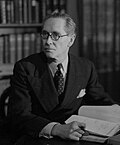
 United Kingdom of Great Britain and Northern Ireland
Explanation
Philip Noel-Baker worked hard so that countries would stop fighting and live together peacefully. He was also an athlete and once ran in the Olympic Games. But his biggest goal was to build a safe world for everyone. He helped organize meetings where nations could talk and reduce their weapons. Just as we settle quarrels by talking, he believed countries could do the same. For these efforts he received the Nobel Peace Prize.
Related Keywords
disarmament
Disarmament means reducing the number of weapons and troops a state possesses. Noel-Baker feared that massive post-World War I armies would trigger another conflict. He therefore advocated phased cuts verified by an international body. The idea inspired later negotiations on nuclear and conventional-force reductions. Present-day treaties like START and New START trace their conceptual roots to these principles.
League of Nations
The League of Nations, founded in 1919 after World War I, was the first global collective-security body. Noel-Baker worked in its Secretariat, drafting documents and mediating disputes among member states. Although the League failed to prevent World War II, it created a permanent forum for international cooperation. Noel-Baker’s experience there shaped his later proposals for UN reform. Specialized League agencies on health and refugees became prototypes for today’s WHO and UNHCR.
nuclear abolition movement
The nuclear abolition movement seeks to ban the development, deployment, and use of nuclear weapons. From the late 1940s Noel-Baker called for a test moratorium and cited health effects of atmospheric tests in parliamentary speeches. His advocacy helped shape public opinion and paved the way for the 1963 Partial Test-Ban Treaty. Today, ICAN’s Treaty on the Prohibition of Nuclear Weapons (TPNW) continues this trajectory. The movement highlights ethical and humanitarian aspects through survivors’ testimony and scientific studies.
positive security
Positive security is the notion that safety is increased not by the cumulative military strength of rivals but through cooperative institutions and confidence-building measures. Noel-Baker argued for shifting security from a zero-sum to a plus-sum game. OSCE confidence-building measures and EU integration policies reflect this idea. The concept aligns with human-security approaches and is often linked to economic and environmental programs. When implemented alongside disarmament, it can weaken structural causes of war over the long term.
Geneva Disarmament Conference
Held from 1932 to 1934, the Geneva Disarmament Conference was the largest multilateral arms-reduction negotiation after World War I. Serving as an advisor to the British delegation, Noel-Baker helped shape agendas and drafts that proposed comprehensive cuts from small arms to chemical weapons. Although the conference collapsed after Nazi Germany’s withdrawal, it popularized verification systems and category-based ceilings. Cold-War talks such as SALT and the Chemical Weapons Convention drew on its technical debates. Thus, despite its failure, the conference left a substantial institutional legacy.