1978 Nobel Peace Prize
Reason for Award
for jointly having negotiated the Camp David Accords, achieving peace between Egypt and Israel
Laureates
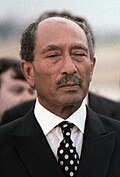
 Egypt
Egypt
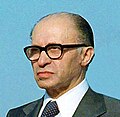
 Israel
Explanation
Egypt and Israel had fought several wars. In 1978, Egypt’s President Sadat and Israel’s Prime Minister Begin met at Camp David, a retreat in the United States. U.S. President Carter helped them. For 12 days they talked again and again and wrote a promise to stop fighting and be friendly. This promise is called the Camp David Accords. Because of the accords, the two countries later signed a peace treaty and the long conflict ended. The Nobel Peace Prize honored the two leaders for taking this brave step.
Related Keywords
Camp David Accords
Signed on 17 September 1978, the Camp David Accords are two framework documents that address Egypt–Israel peace and the interim handling of the Palestinian question. Negotiations lasted 12 days at the U.S. presidential retreat, with Jimmy Carter as mediator. The papers specify phased Israeli withdrawal from Sinai, mutual recognition, demilitarized zones, and a roadmap toward Palestinian self-government. The accords led directly to the 1979 Peace Treaty and drastically reduced inter-state warfare in the Middle East. They have endured for more than four decades and remain a pillar of regional security.
Sinai Peninsula
Connecting Africa and Asia, the triangular Sinai Peninsula was occupied by Israel after 1967 but was slated for phased return under the Camp David Accords. Rich in oil fields and controlling approaches to the Suez Canal, Sinai was central to the Arab–Israeli dispute. Post-accord, the peninsula was divided into Zones A, B, and C, demilitarized, and monitored by a multinational force. Full hand-over to Egypt was completed in 1982, after which Egypt promoted tourism in the area. The return became the classic example of 'land for peace.'
Jimmy Carter
The 39th President of the United States, Jimmy Carter served as the principal mediator of the Camp David Accords. He employed intensive shuttle diplomacy, holding separate meetings and offering detailed maps and draft texts to bridge disagreements. Carter remained at the retreat throughout the 12-day negotiations until a solution was reached. He treated Middle East peace as a top priority of his presidency and later organized the monitoring force and aid packages that underpinned the treaty. After leaving office he founded the Carter Center, continuing conflict mediation and election observation worldwide, becoming an emblem of peaceful diplomacy.
UN Security Council Resolution 242
Adopted after the 1967 Six-Day War, UN Security Council Resolution 242 calls for Israeli withdrawal from occupied territories and the right of every state in the area to live within secure boundaries. The Camp David Accords explicitly cite 242 as their legal base, legitimizing Sinai’s return and Palestinian autonomy. Resolution 242 is viewed as the first international document to embody the "land for peace" principle. Its ambiguous wording about "the territories" versus "territories" has fueled decades of debate, yet it remains the cornerstone of diplomatic frameworks. The resolution’s concepts were carried forward in the Oslo Accords and the Arab Peace Initiative.
Palestinian autonomy
Outlined in Part I of the Camp David Accords, Palestinian autonomy envisioned a five-year interim self-government in the West Bank and Gaza. Specifics on jurisdiction and security control were left unresolved and later taken up in the Oslo process. At the time, neither Jordan nor the Palestine Liberation Organization (PLO) were parties, making implementation difficult. Nevertheless, the inclusion of autonomy in a formal document was groundbreaking and is regarded as the starting point for statehood discussions. Although a final settlement remains elusive, the autonomy framework still sits at the heart of Middle East peace efforts.
Multinational Force and Observers (MFO)
Created in 1982 after a UN peacekeeping force was vetoed, the Multinational Force and Observers is a non-UN civilian-led monitoring mission stationed in Sinai under the peace treaty. Led by the United States, it oversees force-level ceilings and air activity in designated zones and submits quarterly reports. Troops come from a dozen countries and wear distinctive orange insignia instead of UN blue. The MFO demonstrates that monitoring mechanisms can be built outside the UN framework when political consensus exists. Its success has informed later ad-hoc peacekeeping arrangements.
diplomatic negotiation
Diplomatic negotiation is the formal dialogue by which states or organizations reconcile interests and forge agreements. Camp David stands out for its third-party mediation, intensive retreat setting, and top-down text drafting. Confidentiality was paramount; media blackout created space for concessions. Rapid counter-proposals built trust, and legal specialists vetted every draft before adoption. The episode is now a textbook case of proximity talks and shuttle diplomacy in international relations.