1994 Nobel Peace Prize
Reason for Award
for their efforts to create peace in the Middle East
Laureates
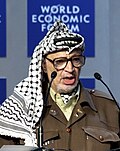
 Palestine, State of
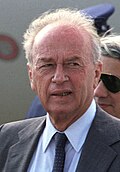
 Israel
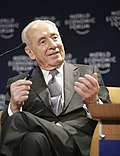
Israel
Explanation
Israelis and Palestinians have fought for a long time over the same land. Yasser Arafat, Yitzhak Rabin, and Shimon Peres decided to solve the problem by talking instead of fighting. In 1993 they made an agreement called the Oslo Accords, taking the first step to recognize each other. The agreement gave many people hope that peace is possible. For their bravery and hard work, the three leaders received the Nobel Peace Prize in 1994.
Related Keywords
Oslo Accords
A 1993 framework agreement signed by Israel and the PLO. It provided for mutual recognition and limited Palestinian self-rule, envisioning a phased path toward final-status negotiations. It emerged from secret Norwegian mediation and was hailed as a new model for peace processes. However, by deferring core issues such as borders and refugees, it created political gaps during implementation. The accords thus represent both a landmark success and a cautionary tale.
Palestine Liberation Organization (PLO)
Founded in 1964 as the representative body of the Palestinian people. Once committed to armed struggle, it shifted in 1988 toward a two-state solution grounded in international law. Under the Oslo Accords it formally recognized Israel’s right to exist. Chaired by Yasser Arafat, it wielded significant political and military influence. Today it maintains an overlapping relationship with the Palestinian Authority.
Two-State Solution
A conflict-resolution model envisaging Israel and Palestine as two independent states living side by side. Based on UN Security Council Resolution 242, it involves land swaps and mutual recognition. Since Oslo, it has been the official stance of most of the international community, yet settlement expansion and border demarcation pose serious obstacles. Fluctuating public support and leadership changes influence its feasibility. It remains the core concept in peace negotiations.
Middle East Peace Process
An umbrella term for the series of negotiations and agreements among Israel and Arab parties since 1948. It includes milestones such as the Camp David Accords (1978), the Madrid Conference (1991), and the Oslo Accords (1993). Great-power mediation, financial aid, and regional cooperation frameworks are considered essential components. Despite cycles of stagnation and renewal, it commands global attention due to implications for international order and energy security. Scholars study it as a dynamic system with intricate interactions.
Territories Occupied in 1967
A collective term for Gaza, the West Bank, East Jerusalem, the Golan Heights, and the Sinai Peninsula captured by Israel during the 1967 Six-Day War (Sinai was later returned). Their legal status is one of the thorniest issues in peace talks. Oslo granted limited self-rule in parts of these areas, yet final status remains unresolved. Settlement activity and barrier construction have further complicated borders. Ownership disputes continue in forums such as the UN and the ICJ.
Nobel Peace Prize
An international award based on Alfred Nobel’s will, given to individuals or organizations that best promote fraternity among nations, arms reduction, or peace congresses. It is selected by the Norwegian Nobel Committee appointed by Parliament. Through prize money and global attention, it boosts laureates’ work and creates diplomatic leverage. Controversial selections occur, sparking debate over the definition of peace and political implications. The 1994 prize was seen as an ‘incentive to act’ for an ongoing peace process.