1995 Nobel Peace Prize
Reason for Award
for their efforts to diminish the part played by nuclear arms in international politics and, in the longer run, to eliminate such arms
Laureates
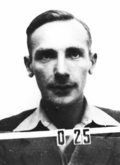
 United Kingdom of Great Britain and Northern Ireland

 World
World
Explanation
There are very powerful bombs called nuclear weapons, and if they are used, terrible things happen. Mr. Rotblat and the Pugwash Conferences worked so that countries talk to each other, reduce these weapons, and someday get rid of them. They keep telling grown-ups that problems should be solved by talking so everyone can live safely.
Related Keywords
nuclear disarmament
Nuclear disarmament denotes the phased reduction and eventual elimination of nuclear weapons and their roles by possessing states. Bilateral and multilateral accords such as SALT and the later START treaties are central pillars. Robust verification, transparency, and confidence-building measures are indispensable components of any comprehensive framework. The Pugwash movement supported the development of such mechanisms through scientific advice and informal dialogue. Rotblat persistently promoted a vision of a world without nuclear weapons at the UN and other fora.
Non-Proliferation Treaty
Signed in 1968, the NPT is the key international accord built on three pillars: non-proliferation, peaceful use, and disarmament. Non-nuclear-weapon states pledge not to build bombs, while the five recognised nuclear powers undertake to negotiate disarmament in good faith. Verification is handled by IAEA safeguards, expanded through the Additional Protocol. Pugwash supplied expert memoranda during drafting and continues to brief Review Conferences. When the treaty was indefinitely extended in 1995, Rotblat and colleagues called for renewed commitment to total disarmament.
Pugwash Conferences
Launched in 1957 in Pugwash, Canada, the conferences evolved into an NGO that offers scientists a venue for dialogue across Cold War divides. It organises annual meetings, workshops, and youth forums and issues statements that influence governments and the UN. The closed setting permits candid debate and supplies technical underpinnings for many arms-control negotiations. Its decades-long contribution was formally recognised with the 1995 Nobel Peace Prize. The movement now expands its work to managing risks from emerging technologies.
scientific responsibility
Rotblat insisted that scientists must take responsibility for the consequences of their inventions. Scientific responsibility means assessing the societal impact of research and acting to minimise harmful outcomes. In an era of dual-use technologies such as nuclear power or AI, this responsibility is even more critical. When scientists engage in policy advice and public education, they can temper political or market excesses. The Pugwash movement has embodied this ethos as a global network.
arms-control verification
Verification of treaty compliance is the cornerstone of credible arms control. Satellite imagery, on-site inspections, environmental sampling, and data exchanges form multilayered tools. Robust verification encourages states to join agreements and deters violations. Pugwash experts proposed applying advanced techniques such as isotopic analysis and reactor process monitoring. These ideas influenced IAEA safeguards and the CTBT’s monitoring system.
Cold War
The geopolitical standoff between the US and the USSR from 1947 to 1991 was marked by massive nuclear deployments and an arms race. Although direct fighting was limited, proxy wars and ideological rivalry affected many regions. The risk of nuclear war peaked during the 1962 Cuban Missile Crisis, prompting subsequent arms-control negotiations. Throughout the Cold War, the Pugwash Conferences maintained scientific dialogue and fostered confidence building. Their model has since been applied to regional conflicts and emerging-weapons risk management.
Comprehensive Nuclear-Test-Ban Treaty
Adopted in 1996, the CTBT bans all nuclear explosions, including those underground. Although entry into force awaits ratification by several states, its International Monitoring System is already detecting clandestine tests. By making it technically harder to modernise weapons, the treaty aims to restrain proliferation and arms racing. Pugwash scientists evaluated seismic analysis and radio-xenon detection, contributing to the IMS design. Rotblat vigorously argued for early entry into force, pushing the shift from partial to comprehensive test bans.