2009 Nobel Peace Prize
Reason for Award
for his extraordinary efforts to strengthen international diplomacy and cooperation between peoples, and for giving people around the world hope for a better future
Laureates
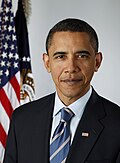
 United States of America
Explanation
Mr. Obama was the President of the United States. He worked very hard so that countries could talk and get along. He asked the world to reduce nuclear weapons and stop wars. In 2009, the Nobel Peace Prize committee decided his efforts were great and gave him the prize. He helped people imagine a future where everyone from different nations can be friends. The award is also an important message that we all should protect peace.
Related Keywords
international diplomacy
International diplomacy is the process by which states seek solutions to conflicts of interests without resorting to war. President Obama emphasized “re-engagement” through multilateral meetings and bilateral summits. His outreach to Russia and to the Muslim world aimed at reducing tensions. Diplomacy requires time to build trust, but when successful it produces long-term stability. The Nobel Committee saw intrinsic value in this process.
nuclear disarmament
Nuclear disarmament seeks to reduce and ultimately eliminate nuclear weapons. The Prague speech formally adopted a vision of “a world without nuclear weapons.” The New START treaty provided a concrete step by capping strategic arsenals through the late 2010s. Verification mechanisms and mutual confidence are indispensable, posing both technical and political challenges. Even so, disarmament is viewed as a way to ease the security dilemma.
multilateralism
Multilateralism means acting through international institutions and agreements rather than unilaterally. The Obama administration stressed consultation within the UN, G20 and other forums, signaling a return to rule-based engagement. Transboundary issues like climate change and pandemics are considered more effectively managed multilaterally. The approach, however, can be slow and often produces lowest-common-denominator compromises. The Peace Prize symbolized a revival of multilateralism.
New START Treaty
Signed in 2010, the New START Treaty between the United States and Russia limits deployed strategic warheads to 1,550 and delivery vehicles to 700; its implementation period has been extended to 2026. The agreement includes extensive on-site inspections and data exchanges, updating post-Cold-War arms control. U.S. Senate ratification required bipartisan cooperation, underscoring domestic political dimensions. The treaty serves as a confidence-building measure and influences other states’ disarmament talks.
UN Security Council
The UN Security Council is the primary body responsible for maintaining international peace and security. In September 2009 President Obama chaired a session that unanimously adopted Resolution 1887 on nuclear disarmament. It was the first time a U.S. president personally presided over a Council meeting. The resolution called for strengthening the NPT framework and preventing nuclear terrorism. Security Council consensus strongly shapes international norms.
Arab–Israeli peace negotiations
These negotiations aim to end the long-standing Middle East conflict. The Obama administration supported a two-state solution and appointed a special envoy to spur dialogue. Direct talks stalled, yet the United States demonstrated active mediation efforts. A settlement would impact regional stability and the global economy. The slow progress illustrates the complexity of peace-building.
climate change diplomacy
Climate change diplomacy coordinates global emission targets and financial mechanisms to curb warming. The Obama administration led political agreement at the Copenhagen summit. Climate issues intersect with security and development, resonating with the Peace Prize’s goals. Domestically, the administration expanded investment in renewable energy. Environmental diplomacy is regarded as a new peace challenge of the 21st century.
soft power
Soft power denotes influence derived from culture, values and policy attractiveness rather than military or economic coercion. Obama’s speeches and dialogue-oriented strategy helped improve the U.S. image abroad. Soft power emphasizes long-term trust over immediate outcomes. Educational exchanges and development aid are practical tools. The Peace Prize can be seen as an endorsement of employing soft power.