2011 Nobel Peace Prize
Reason for Award
for their non-violent struggle for the safety of women and for women’s rights to full participation in peace-building work
Laureates
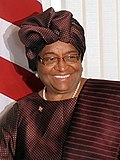
 Liberia
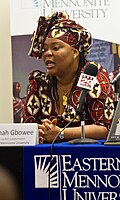
Liberia
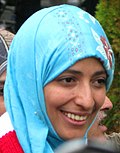
 Yemen
Yemen
Explanation
The Nobel Peace Prize is given to people or groups who work hard for world peace. In 2011, three women—Ellen Johnson Sirleaf and Leymah Gbowee from Liberia, and Tawakkol Karman from Yemen—received the prize. They spoke out and acted without violence so everyone could live safely and talk together. They especially helped girls and women join peace talks. Their efforts pushed war-torn areas closer to peace. We can learn that our own voices, when used kindly, can help make the world safer.
Related Keywords
Non-violent resistance
Action that exerts pressure on society or government without weapons. It includes marches, sit-ins and boycotts among many other tactics. Non-violence tends to attract broader, longer-term support and gains higher legitimacy in the eyes of outsiders. The 2011 laureates built cross-gender and cross-religious non-violent networks. Their collective action compelled negotiations and paved the way for peace agreements.
UN Security Council Resolution 1325
Adopted in 2000, this resolution calls for protecting women in conflict and ensuring their participation in decision-making. It rests on four pillars: prevention, protection, participation, and relief & recovery. Member states draft National Action Plans and report on women’s involvement as a key metric. The Liberian and Yemeni cases are cited in UN reports as field-level implementations. The 2011 Nobel Peace Prize reaffirmed the resolution’s relevance.
Liberian Civil War
Refers to two armed conflicts spanning 1989-2003. Driven by resource competition and ethnic tensions, the wars killed more than 200,000 people. The UN peacekeeping mission UNMIL handled security and election logistics after the ceasefire. A distinctive feature was the pressure exerted by civil society, especially women’s groups, which accelerated the peace talks. The episode is now a textbook example of grassroots leverage in peacebuilding scholarship.
Arab Spring
A wave of popular uprisings that began in Tunisia in late 2010 and spread across the Middle East and North Africa. Social media amplification and youth unemployment were key catalysts. In Yemen, nationwide protests challenged a long-standing regime, with Tawakkol Karman emerging as a symbolic leader. The visible presence of women in the streets drew attention in a traditionally conservative society and was widely covered by international media. The outcomes and backlash varied greatly from country to country.
Women, Peace and Security (WPS)
The WPS agenda seeks to ensure women’s safety and full participation in peace processes. Since UNSCR 1325, states and international bodies have adopted action plans to implement it. Empirical studies show that agreements last longer when women are involved. The 2011 laureates serve as emblematic practitioners of WPS. Their success stories are frequently referenced in policy evaluations and training programs.
Grassroots mobilization
The spontaneous gathering of ordinary people in a community to act toward a shared goal. It is typically network-based rather than hierarchical, allowing tactical flexibility. Through information sharing and mutual support, grassroots groups can influence large power structures. In Liberia and Yemen, markets and religious venues served as mobilization hubs. Enduring trust built through daily interactions proved more important than charismatic leadership alone.
Reconciliation process
An effort to repair relationships between former adversaries and foster coexistence after conflict. It unfolds through multiple stages such as truth-finding, apology, compensation, and institutional reform. Women’s participation is crucial for uncovering victim testimonies and preserving comprehensive records. In Liberia’s Truth and Reconciliation Commission, female testimonies directly shaped policy recommendations. Reconciliation is not only emotional healing but also the reconstruction of institutional justice.
Truth and Reconciliation Commission
An investigative body established by governments or international actors to document past human rights abuses and propose measures to prevent recurrence. Unlike criminal courts, it prioritizes testimony gathering and public disclosure of facts. Liberia’s TRC held community hearings and pioneered the inclusion of women’s and children’s perspectives. Its final report recommended education reforms and land-tenure corrections. Scholars view TRCs as bridges between reconciliation and institutional change.