1901 Nobel Prize in Chemistry
Reason for Award
for the discovery of the laws of chemical dynamics and osmotic pressure in solutions
Laureates
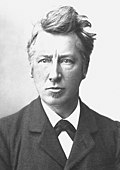
 Netherlands
Explanation
When you put salt into water, the salt disappears because it spreads out into tiny pieces. If you separate salty water and pure water with a very thin membrane, only the water slowly moves into the salty side. This pulling force is called osmotic pressure. Van ’t Hoff studied how osmotic pressure changes with temperature and concentration and found a formula to calculate it. Thanks to his work, we understand how plants drink water and how hospitals set the correct strength of IV drips.
Related Keywords
chemical dynamics
Chemical dynamics is the study of reaction rates and mechanisms. Van ’t Hoff related reaction speed to variables such as temperature, concentration, and pressure, providing a framework to predict the time required to reach equilibrium. This allowed the catalytic effect to be quantified, advancing industrial process optimization. His ideas laid the groundwork for inferring intermediates and transition states, later confirmed by spectroscopy and computational chemistry. Modern controlled-reaction design and micro-reactor technology still build on this conceptual structure.
osmotic pressure
Osmotic pressure is the pressure difference generated when solvent moves across a semi-permeable membrane from a dilute to a concentrated solution. Van ’t Hoff discovered that for dilute solutions, osmotic pressure equals the pressure of an ideal gas at the same particle number, temperature, and volume. This established a new method for counting solute particles and revolutionized molecular-weight determination of polymers and proteins. In medicine, the theory guides IV fluid formulation, explaining why physiological saline is 0.9 % NaCl. Environmental science exploits the concept in seawater desalination and bio-fuel generation, illustrating its lasting technological impact.
equilibrium constant
The equilibrium constant K quantifies the ratio of product to reactant concentrations at equilibrium. Van ’t Hoff derived its temperature dependence, enabling estimation of ΔH° and ΔS°. Consequently, combustion enthalpies and electrochemical cell voltages could be predicted in advance. Analysis of K shifts caused by catalysts or solvents allowed rational design of selective reactions. Modern process simulators and chemical-equilibrium software operate on this theoretical core.
van ’t Hoff equation
The van ’t Hoff equation relates osmotic pressure π to the amount of solute n, temperature T, and solution volume V through πV = nRT. Analogous to the ideal-gas law PV = nRT, it treats dissolved particles like gas molecules. This simple formula made number-average molecular-weight measurements of colloids and polymers straightforward. It also underpins biophysical analyses of water transport across membranes and the concentrating mechanism in kidneys. Emerging salinity-gradient power technologies use the same equation to calculate energy density.
activity
Activity is the ‘effective concentration’ used for real solutions that deviate from ideality. Van ’t Hoff’s work initiated the activity-coefficient concept, later refined by Debye–Hückel theory. Using activity enables accurate thermodynamic calculations for concentrated electrolytes and biological fluids. In battery chemistry, electrolyte activity affects cell potential, making it vital for lithium-ion battery design. The concept also appears in modeling enzyme kinetics and drug solubility.
chemical thermodynamics
Chemical thermodynamics analyzes energy and matter transformations under the laws of thermodynamics. Van ’t Hoff described chemical equilibrium with free energy, generalizing the ΔG criterion for spontaneity. This provided theoretical support for large-scale processes such as fuel cells and ammonia synthesis. It clarified the role of entropy change and allowed evaluation of reaction irreversibility. Modern materials informatics relies heavily on chemical-thermodynamic databases rooted in this legacy.
molar osmotic pressure
Molar osmotic pressure expresses the osmotic pressure per mole of solute, given by π/n. For dilute solutions it equals RT/V and increases proportionally with temperature. The concept is applied to regulating cellular osmotic balance and designing dialysis membranes. In polymer chemistry it is essential for evaluating molecular-weight distributions and calibrating gel-permeation chromatography. Geoscience uses it when assessing pore-water pressures in deep-sea sediments.
reaction enthalpy
The reaction enthalpy ΔH indicates the heat absorbed or released during a chemical reaction. Van ’t Hoff’s temperature-coefficient equation allows indirect determination of ΔH from the temperature dependence of the equilibrium constant. This enables estimation of thermochemical values for reactions whose direct calorimetry is difficult at high temperature and pressure. In catalysis, the sign and magnitude of ΔH help understand kinetic barriers. It is also an indispensable parameter for analyzing material combustion, explosions, and safety-engineering risks.