1902 Nobel Prize in Chemistry
Reason for Award
for his work on the synthesis of sugars and purine derivatives
Laureates
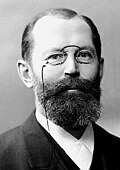
 German Empire
Explanation
The rice and fruits we eat contain a sweet ingredient called sugar. Dr. Fischer found a way to make those sugars in the laboratory. Just like mixing ingredients to bake a cake, he combined tiny building blocks to create sugars. He also made a substance called “purine,” which later became known as one of the letters in DNA. Thanks to his work, scientists could get important materials to study how life works. These discoveries still help us develop new medicines and foods today.
Related Keywords
sugars
Compounds classified as carbohydrates that serve as energy sources and structural materials in cells. Fischer artificially synthesized several monosaccharides and elucidated their stereochemistry. His methods provide an indispensable foundation for modern glycan analysis and carbohydrate-based drug development. Understanding sugar structures has advanced research into metabolic disorders such as diabetes.
purine
A bicyclic nitrogen-containing heterocycle forming the backbone of DNA and RNA bases adenine and guanine. Fischer’s synthesis marked the starting point of nucleic-acid chemistry and later inspired the development of antiviral and antigout drugs. Purine metabolism is also involved in cellular energy and signal transduction, making it a crucial subject in biomedical research.
Fischer projection
A planar notation that depicts stereoisomers by representing chiral centers at the cross points, with the arrangement of substituents giving absolute configuration. Widely used for complex polyfunctional molecules such as sugars and amino acids. Fischer systematized carbohydrate relationships using this diagram and greatly popularized the concept of stereochemistry.
synthetic chemistry
The discipline of constructing target compounds artificially. Fischer’s work demonstrated that natural substances can be recreated in the laboratory, becoming the starting point for modern total synthesis, organocatalysis, and pharmaceutical chemistry. Multistep route design and stereocontrol are key aspects.
carbohydrate chemistry
The field dealing with the structure, reactions, and synthesis of sugars. Handling multiple stereocenters and hydroxyl groups is a central challenge. Fischer laid the foundations, and today the field extends to glycomedicines and vaccine adjuvant development.
nucleic acid bases
The chemical letters that compose DNA and RNA. They are classified into purine bases (adenine, guanine) and pyrimidine bases (cytosine, thymine, uracil). Fischer’s purine synthesis opened the door to base research and contributed to advances in genetic engineering and molecular biology.
stereochemistry
The study of how the three-dimensional arrangement of atoms in molecules affects their properties and reactivity, including concepts such as chirality and enantiomers. Through his sugar studies, Fischer proposed a quantitative framework for stereochemistry, profoundly influencing organic chemistry as a whole.