1905 Nobel Prize in Chemistry
Reason for Award
for his work on organic dyes and hydroaromatic compounds
Laureates
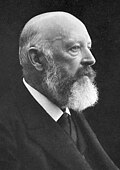
 German Empire
Explanation
The blue color of jeans comes from a dye called indigo. Long ago people had to extract this dye from plants little by little, making it very expensive. German chemist Adolf von Baeyer discovered how to make indigo and other dyes in the laboratory. He studied how color arises and planned how to arrange atoms to get the color he wanted. Thanks to his work, people could enjoy inexpensive and colorful clothes. Von Baeyer’s research greatly helped both the science of color and the growth of factories.
Related Keywords
organic dye
Organic dyes are carbon-based molecules that absorb specific wavelengths of visible light, producing vivid colors. A conjugated system called a chromophore controls the energy gap and thus the absorption wavelength. Dyes such as indigo or aniline derivatives bind to fibers through covalent or hydrogen bonds, resisting fading. The rise of synthetic dyes in the late 19th century solved the high cost and limited supply of natural dyes. Today organic dyes are used not only in textiles but also in LCDs and dye-sensitized solar cells.
indigo
Indigo is a deep blue-violet dye with molecular formula C16H10N2O2. Originally extracted from plants such as Indigofera, it became cheap and widely available after von Baeyer’s synthetic route. Its color arises from a conjugated double-bond system that undergoes π→π* transitions, reflecting blue light. Under reducing conditions indigo converts to a colorless leuco form that penetrates fibers and oxidizes back to the colored form, making it ideal for durable denim dyeing. Bio-indigo production and electrochemical synthesis are being explored to reduce environmental impact.
hydroaromatic compound
Hydroaromatic compounds are structures in which a benzene ring is partially or fully hydrogenated. The diminished aromaticity induces non-planarity, leading to markedly different reactivity and physical properties. Tetrahydronaphthalene and decalin are classic examples, used industrially as solvents and lubricants. Von Baeyer isolated and characterized such molecules, demonstrating that aromaticity is a continuous rather than binary concept. Today partial hydrogenation remains crucial for tuning selectivity in pharmaceutical synthesis.
chromophore
A chromophore is the conjugated electronic system within a molecule that absorbs light and produces color. The smaller the energy gap between the ground and excited π states, the longer the wavelength absorbed, changing the perceived color. Substituent effects extend or contract the conjugation: electron donors or acceptors can red-shift the color. Von Baeyer analyzed indigo’s chromophore and quantified the structure–color relationship. The concept now guides the design of laser dyes and OLED emitters.
synthetic dye industry
The synthetic dye industry grew rapidly after the 1856 discovery of mauveine. Von Baeyer’s indigo synthesis was a second technological milestone and fueled the rise of large chemical companies such as BASF and IG Farben. Mass-production techniques lowered clothing costs and brought color into everyday life. Know-how in dye intermediates spread to pharmaceuticals, agrochemicals, and photographic materials, diversifying the chemical sector. Ecological concerns now drive wastewater treatment improvements and shifts toward renewable feedstocks.
electrophilic aromatic substitution
Electrophilic aromatic substitution involves the addition of an electrophile to an aromatic ring followed by proton loss, replacing a hydrogen. Nitration, sulfonation, halogenation, and Friedel–Crafts reactions are classic examples and were essential for tailoring substituents in dye precursors. Ortho/para versus meta orientation is dictated by the electron-donating or ‑withdrawing nature of existing substituents. Von Baeyer optimized protecting groups and reaction conditions to modify benzene cores without destroying chromophores. The methodology remains fundamental to pharmaceutical synthesis and functionalization of π-conjugated materials.
Baeyer strain theory
Baeyer’s strain theory proposes that cycloalkanes become less stable as their bond angles deviate from the ideal 109.5°. Three- and four-membered rings therefore possess high angle strain and exhibit enhanced reactivity, readily undergoing ring opening or addition reactions. The theory correlates well with thermochemical data and rate constants, guiding the design of cyclization reactions. Later developments such as Baldwin’s rules and molecular-mechanics calculations retain strain energy as a central concept. Ring strain remains an important parameter in natural-product synthesis and polymer design.