1910 Nobel Prize in Chemistry
Reason for Award
for his pioneer work in the field of alicyclic compounds
Laureates
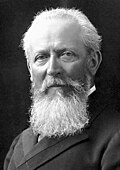
 German Empire
Explanation
The nice smells we sense from flowers and trees come from tiny molecules. Otto Wallach studied special ones that have a ring-like shape. Imagine a strip of paper joined end-to-end to make a circle. He carefully checked how these molecules are built and what they can do, grouped the similar ones together, and gave them names. Thanks to his work, companies that make fragrances or medicines can now use these molecules wisely. His research showed chemists how important it is to arrange invisible parts in an orderly way. That is why he received the Nobel Prize in Chemistry. Wallach’s work still supports our everyday life today.
Related Keywords
alicyclic compound
Alicyclic compounds are ring molecules that lack aromaticity and are either saturated or partly unsaturated. Cyclohexane, decalin, and terpene skeletons are typical examples, usually exhibiting multiple stereoisomers. Unlike aromatics, they have no Hückel ring current stabilization, so conformational preferences and strain energy govern their reactivity. Wallach coined the term “alicyclic” and created the first systematic classification based on ring size and functional groups. Today they are widely used in pharmaceuticals, agrochemicals, and as polymer precursors, remaining key targets of synthetic methodology.
terpene
Terpenes are natural compounds built from isoprene units (C5H8), responsible for the aroma of essential oils and plant defense. They are classified by carbon number—monoterpenes (C10), sesquiterpenes (C15), etc.—and many possess alicyclic frameworks. Wallach isolated and purified terpenes, confirmed their structures via chemical transformations, and organized them into coherent series. His data became indispensable references for later stereochemical studies and biosynthetic pathway elucidation. Today terpenes remain vital as fragrances, solvents, and bioactive agents, with biotechnology enabling large-scale production.
stereochemistry
Stereochemistry investigates how a molecule’s three-dimensional arrangement affects its properties and reactions. In alicyclic compounds, conformations like chair or boat and cis-trans isomerism dramatically alter reactivity. Wallach’s optical rotation measurements provided clues about molecular handedness and laid groundwork for stereochemical formalization by Fischer and Haworth. Modern drug development often requires a single enantiomer for efficacy, making stereochemical control essential. Computer simulations and X-ray crystallography now reveal exact 3-D arrangements, enabling sophisticated reaction design.
essential oil
Essential oils are volatile aromatic mixtures extracted from plants, mainly composed of terpenes and aromatic aldehydes. In the 19th century they were widely used as medicines and fragrances, but component analysis was difficult. Wallach carried out low-pressure distillation to isolate high-purity constituents and determine their structures, pioneering techniques that foreshadow modern separation methods like gas chromatography. Essential oils remain important in aromatherapy, food additives, and agricultural repellents.
nomenclature
Chemical nomenclature provides a systematic language for expressing molecular structures and is vital for sharing research. Wallach noted that existing aromatic-centric names were unsuitable for alicyclic compounds and introduced new terms combining skeleton names with ring size. This groundwork later influenced IUPAC nomenclature, which adopted names like cyclohexane. A standardized naming system reduced misunderstandings in papers and patents and facilitated chemical database construction. Modern machine-readable formats such as SMILES and InChI build upon these linguistic developments.