1913 Nobel Prize in Chemistry
Reason for Award
for his work on the linkage of atoms in molecules, through which he opened up new fields of research, especially in inorganic chemistry
Laureates
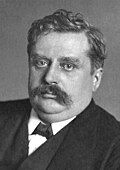
 Switzerland
Explanation
All the colorful crystals and metals we see are made of molecules, which are atoms holding hands. Alfred Werner was like a detective who studied how those hands are linked. He imagined small molecules sitting around a metal atom in a circle and then proved it in experiments. In this way he created a way to draw pictures of the invisible atomic world. Thanks to Werner, people who make jewels or medicines can now design new things by thinking about the shape of molecules.
Related Keywords
coordination chemistry
Coordination chemistry studies the structure, reactivity, and properties of complexes formed between metal ions and ligands. Werner’s theory defined coordination number and ligand geometry, offering guidelines to predict isomers and ionization behavior. Today the field underpins catalysts, MRI contrast agents, and luminescent materials. Combined with computational chemistry and spectroscopy, it enables correlation of electronic structure with function. Its concepts also illuminate mechanisms of metalloenzymes in biology.
octahedral coordination geometry
In an octahedral geometry, six ligands surround a central metal ion at the vertices of an octahedron. Werner postulated this arrangement for Co(III) complexes and showed its consistency with experimental data. Octahedral complexes exhibit cis-trans and fac-mer isomerism, among others. Ligand-field theory splits d-orbitals into t2g and eg, directly explaining color and magnetism. In modern materials chemistry, octahedral coordination is exploited in spin-crossover and high-efficiency luminescent systems.
stereoisomerism
Stereoisomerism refers to compounds with identical formulas but different three-dimensional arrangements of atoms. Werner systematically described cis-trans and optical isomers in inorganic complexes for the first time. Stereoisomers can show markedly different physical and chemical properties, influencing drug activity and catalytic selectivity. Time-resolved spectroscopy and X-ray diffraction now allow tracking of dynamic stereochemical changes. Controlling isomerism is a core technique in molecular design across organic and inorganic chemistry.
chirality
Chirality is the property of being non-superimposable on one’s mirror image, analogous to right and left hands. Werner demonstrated optical activity in inorganic complexes, extending a concept once thought exclusive to organic molecules. Enantiomers rotate plane-polarized light in opposite directions and interact differently with biological molecules. Chiral metal complexes now serve as asymmetric synthesis catalysts and in circularly polarized light-emitting devices. Quantum-chemical calculations analyze chiral potentials and aid the design of new chiral materials.
oxidation state (valence)
The oxidation state is an integer representing the degree to which an atom has lost or gained electrons and is a quantitative indicator of bonding and redox behavior. Werner equated primary valence with oxidation state and secondary valence with coordination number, simplifying charge calculations in complexes. The concept is indispensable in redox chemistry, batteries, and catalytic mechanisms. Modern techniques such as XPS and XANES allow experimental determination. High-valent metals are being explored for environmental remediation and energy-conversion catalysis.
chelate effect
The chelate effect describes the enhanced stability of complexes in which multidentate ligands form rings around a metal, compared with complexes having equivalent monodentate ligands. After Werner’s theory, this effect was demonstrated with ligands such as ethylenediamine. Chelate stabilization is explained by a combination of entropy gain and enthalpic benefits from multiple metal-ligand bonds. In medicine it guides the design of heavy-metal antidotes and MRI contrast agents. Environmental chemistry exploits it for metal ion recovery and wastewater treatment.
ligand substitution kinetics
Ligand substitution kinetics is the study of how quickly a ligand in a complex is replaced by another ligand. While Werner mostly discussed equilibrium composition, later scientists such as Ingold and Taube developed kinetic analyses. Substitution rates depend on the metal’s electronic configuration, coordination number, and the reaction mechanism (associative, dissociative, interchange). In biology, these rates govern functional regulation at metalloenzyme active sites. In industrial catalysis they are key parameters for optimizing durability and selectivity.
coordination number
The coordination number is the integer count of ligands directly bonded to a metal ion. Werner showed that 6 and 4 are particularly common and used this fact for structural predictions. Coordination number influences geometry, electronic structure, and reactivity. Under special conditions, unusual numbers such as 2, 7, or 8 are observed, drawing interest in high-pressure chemistry and f-element chemistry. Advances in computational chemistry and spectroscopy now allow evaluation of coordination-number dynamics even in solution.