1914 Nobel Prize in Chemistry
Reason for Award
for his accurate determinations of the atomic weight of a large number of chemical elements
Laureates
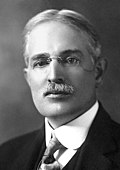
 United States of America
Explanation
Everything around us, like water or table salt, is made of tiny particles called atoms. Atoms have weight, and if we know that weight exactly, we can tell how different substances join together. Theodore Richards improved balances and thermometers so he could measure an atom’s weight very accurately. Thanks to him, chemical calculations became more reliable and helped people create new medicines and materials. His work was like being the master of measuring in the big kitchen of science.
Related Keywords
atomic weight
Atomic weight is the relative mass of one atom of an element averaged over its natural isotopic composition, expressed on the scale where carbon-12 equals exactly 12.000. It underpins the choice of coefficients in chemical equations, the calculation of molar masses, and geochemical tracer studies. In the 19th century both the hydrogen-1 and oxygen-16 scales were used simultaneously and individual laboratories reported values with large discrepancies. Richards’ high-precision measurements drastically reduced this spread and stimulated the preparation of a unified table. The modern IUPAC Table of Standard Atomic Weights still echoes his numbers and serves as an indispensable common language for chemistry.
isotope
Isotopes are atoms that share the same atomic number but differ in mass number; their chemistry is nearly identical, yet their masses yield distinct signatures in mass spectra and decay behaviors. Richards observed that lead derived from radioactive decay chains was slightly heavier than ordinary lead, an experimental clue that predated the formal isotope concept. His findings helped pave the way for Soddy and Fajans’ 1913 articulation of isotopes. The discovery opened paths to radiometric dating, stable-isotope environmental studies, and medical tracer techniques. Thanks to high-precision mass measurements, even subtle isotope effects can now be tracked. Modern mass spectrometers routinely resolve isotopic-ratio variations at the ppm scale.
precision analytical balance
A precision analytical balance is a counter-poise instrument capable of reading mass differences on the microgram scale. Richards minimized mechanical friction and thermal drift by using hardened-steel knife edges and argentan bearings at the fulcrum. He also compensated for buoyancy effects by measuring the volume difference between sample and reference weights with mercury displacement, thus correcting for changes in air density. This enabled him to reproduce the mass of a 1 g sample within ±0.01 mg, dramatically improving the reliability of atomic-weight determinations. Modern electromagnetic balances still adopt the vibration damping and temperature-control ideas he pioneered.
chemical analysis
Chemical analysis is the quantitative determination of a substance’s composition or concentration, encompassing gravimetric, volumetric, and spectroscopic methods. In the late 19th century gravimetry was dominant, and Richards relied on mass balances to account precisely for reaction stoichiometry. He systematized a workflow that included sample purity checks, optimized drying protocols, and statistical corrections for systematic errors. This rigorous analytical framework allowed him to reach an unprecedented level of accuracy for the time. His practices laid groundwork for modern QA/QC validation procedures.
mole concept
The mole is an SI base unit for amount of substance, defined since 2020 as containing exactly 6.022 140 76 × 10^23 specified entities. Only with accurate atomic weights can mass be converted into moles with high precision. Richards’ data promoted widespread teaching of the mole and shifted reaction-quantity calculations from percentage by mass to absolute particle counts. Concentration units such as mol L^-1 or mol kg^-1, widely used in medicine and engineering, owe their reliability to the precision benchmark he set. The mole concept remains fundamental to chemical equilibrium and electrochemical computations today.
atomic mass unit
The atomic mass unit (u) equals one-twelfth of the mass of a carbon-12 atom and serves as the scale for expressing atomic and molecular masses. In Richards’ era the oxygen-16 standard was more common, and his precise measurements facilitated the later transition to the 12C reference. By using u, very small masses can be compared intuitively. The unit is indispensable for resolving powers of mass spectrometers and for calculating nuclear binding energies. Richards’ experimental data provided an early empirical demonstration of the attainable precision of the u scale.
molar mass
Molar mass is the mass per mole of a substance, expressed in g mol^-1, and is fundamental for reagent preparation, industrial process design, and environmental measurement. If atomic weights are inaccurate, systematic errors propagate into molar masses, distorting concentration calculations and yield predictions. Richards’ precise values pushed these errors down by orders of magnitude, allowing smaller safety factors even on an industrial scale. In pharmaceutical synthesis, for example, the improved accuracy directly enhanced the calculation of active ingredient content and facilitated the international standardization of quality controls. Molar mass also serves as an input for physical properties such as the gas constant R, diffusion coefficients, and viscosity.
gravimetric analysis
Gravimetric analysis converts a compound quantitatively into a new form and calculates the original component content from the mass of the product. Richards’ reduction of silver chloride to metallic silver is a textbook example, relying on complete reaction and product stability. To boost accuracy he thoroughly assessed ash residues from filter paper, container hygroscopicity, and losses from volatile side products. Even in today’s era of instrumental methods, gravimetry remains indispensable for preparing reference materials and ensuring traceability. Richards’ error analysis helped establish gravimetry as a primary measurement technique with international metrological credibility.