1920 Nobel Prize in Chemistry
Reason for Award
for his work in thermochemistry
Laureates
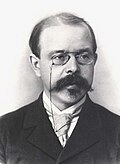
 German Reich
Explanation
When you heat water it becomes hot, and when ice melts you get cold water again. That happens because heat can change materials. Dr. Nernst carefully studied how much heat goes in or out when chemicals or gases join together or split apart. Thanks to him, we can figure out how to make batteries last longer and how to use energy without wasting it. Everyday things like thermometers and dry-cell batteries are actually based on his ideas.
Related Keywords
thermochemistry
The field that studies heat exchange and energy changes accompanying chemical reactions. It quantifies heat released by combustion or absorbed during battery discharge and aids the design of new fuels and materials. Nernst combined thermochemical measurements with equilibrium theory, creating a framework to predict how reactions and equilibrium constants behave with temperature. Modern calorimetry instruments and data repositories adopt his approach as the standard. Thermochemistry is also fundamental to solving energy and environmental challenges.
Nernst heat theorem
A low-temperature energy theorem proposed by Nernst in 1906. It claims that as temperature approaches absolute zero, the free-energy change of a chemical reaction converges to zero, implying vanishing enthalpy and entropy. Later re-proved within statistical mechanics and generalized into the third law of thermodynamics. It is an essential boundary condition for estimating formation energies and heat capacities of solids and provides the theoretical basis for low-temperature property experiments. The theorem is applied in thermodynamic calculations of quantum physics and astrochemistry.
third law of thermodynamics
The principle that the entropy of a perfect crystal becomes zero as temperature approaches absolute zero. It was established by extending and generalizing Nernst’s heat theorem. The third law provides a reference point for measuring absolute entropy and systematically organizing heat capacities and phase transitions of substances. It is directly connected to the design of low-temperature experiments, refrigeration technology, and superconductivity research. The law also links deeply with the zero-point-energy concept in quantum statistical mechanics.
Nernst equation
A formula linking the electromotive force of an electrochemical cell with concentration (activity). Expressed as E = E° − (RT/nF) ln Q, it involves temperature T, number of electrons n, and Faraday’s constant F. It enables quantitative evaluation of battery reaction direction or the voltage of pH sensors, with applications ranging from analytical chemistry to biology. Grounded in Nernst’s thermodynamic theory, it converts chemical-potential differences into electric potential. It is an indispensable tool in designing lithium-ion and fuel cells.
enthalpy
An energy measure defined as H = U + PV under constant pressure. It is one of the most used state functions for measuring reaction heat and analyzing phase changes. Nernst calculated free energy from temperature integrals of enthalpy and entropy, clarifying low-temperature behavior. Today, calorimetry experiments directly measure enthalpy changes, serving as indicators of reaction mechanisms and material stability. The concept is widely used in meteorology and bioenergetics.
Gibbs free energy
A criterion for chemical equilibrium and spontaneity defined as G = H − TS. A negative ΔG means the reaction proceeds spontaneously, while it becomes zero at equilibrium. Nernst’s theory handled the temperature dependence of ΔG in detail and analyzed its behavior at the low-temperature limit. It is indispensable for setting synthesis conditions in industry and calculating battery voltages, and it is used in analyzing metabolic networks in biochemistry. In statistical mechanics it is directly connected to the partition function, bridging the microscopic and macroscopic worlds.
equilibrium constant
A numerical value representing the activity ratio of products to reactants at chemical equilibrium. The larger K is, the more product-favored the reaction is. Nernst expressed how K changes with temperature through thermodynamic quantities and showed its limiting value at low temperatures. This allowed theoretical determination of optimal reaction conditions for new catalysts and materials. The concept is universally used for gas, solution, and solid-state reactions.
calorimetry
An experimental technique that measures heat released or absorbed during chemical reactions or physical processes. Nernst’s work spurred the development of precision calorimetry and decisively established methods for low-temperature heat-capacity measurements. Today, differential scanning calorimeters and absolute calorimeters are widely used to analyze material glass transitions and protein denaturation. The technique improves the reliability of thermochemical databases and is utilized in industrial processes and drug design. Calorimetry is a fundamental measurement tool for discovering energy-efficient reaction pathways.
electrochemistry
The discipline dealing with interactions between electricity and chemical reactions. The Nernst equation gives the relation between ion concentration in solution and potential difference, forming the basis for pH measurement, sensing, and battery design. Electrochemistry is closely involved in technologies such as corrosion prevention, water electrolysis, and metal refining. In recent years it has become central to environmental technologies including lithium-ion batteries, fuel cells, and electrochemical CO₂ reduction. Nernst’s theory remains a cornerstone for predicting the performance of modern electrochemical devices.
heat capacity
The amount of heat required to raise the temperature of a substance by 1 K. There are constant-pressure and constant-volume heat capacities, closely related to phase transitions and degrees of molecular motion. Nernst measured heat capacities at low temperatures and provided pioneering data showing they approach zero as T → 0 K. This gave experimental support for the third law and helped verify the Debye model in solid-state physics. Heat capacity is a fundamental parameter for exploring lattice-vibration properties and heat-transport mechanisms of new materials.