1927 Nobel Prize in Chemistry
Reason for Award
for his investigations of the constitution of the bile acids and related substances
Laureates
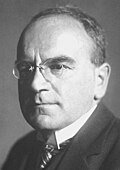
 German Reich
Explanation
Fatty foods do not mix well with water, but our bodies have “bile acids” to help. Bile acids are made in the liver and, like soap, can work with both fat and water, breaking food fats into tiny pieces for digestion. Heinrich Otto Wieland carefully studied what bile acids look like at the molecular level. Thanks to his work, we now understand why bile acids are so important for digesting fat and for treating certain illnesses. When scientists learn a molecule’s shape, it often becomes a clue for protecting our health.
Related Keywords
bile acids
Bile acids are surfactant molecules synthesized from cholesterol in the liver and secreted into the small intestine. They possess a steroid nucleus and a carboxylate group, giving them both hydrophobic and hydrophilic faces that allow lipids to form micelles. Micellization aids pancreatic lipase in fat digestion and is crucial for vitamin absorption. Bile acids are reabsorbed in the ileum and return to the liver via the portal vein, forming the enterohepatic cycle. Disturbances in this cycle cause fat-malabsorption syndromes and hepatobiliary diseases.
steroid nucleus
The steroid nucleus is a tetracyclic structure composed of three fused six-membered rings (A, B, C) and one five-membered ring (D). Various biological molecules arise when side chains or functional groups decorate this 17-carbon core. Cholesterol, sex hormones, and bile acids all share this framework. Stereochemistry strongly influences bioactivity, so pinpointing the position and orientation of each substituent is essential. Wieland’s work was the first to clarify saturation and substitution patterns of the steroid nucleus in bile acids.
cholesterol
Cholesterol modulates cell-membrane fluidity and serves as the precursor for steroid hormones and bile acids. It is synthesized in the liver but also absorbed from food. Excess cholesterol promotes atherosclerosis, so tight feedback regulation exists in the body. Conversion to bile acids is a major elimination route for excess cholesterol. Wieland’s structural insights were essential for understanding the chemistry of this conversion.
cholic acid
Cholic acid is a major bile acid containing three hydroxyl groups, making it relatively water-soluble. Its strong micelle-forming ability is critical for fat absorption. Wieland oxidatively degraded cholic acid to elucidate its skeleton and side chain in detail. Today it serves as a pharmaceutical raw material, for example in saponification assays and enteric-coated drug design. Synthetic derivatives are being explored as liver-disease therapeutics and drug-delivery agents.
oxidative degradation
Oxidative degradation uses powerful oxidants to cleave organic molecules into smaller fragments, from which the original structure can be deduced. Before modern spectrometry, it was central to structural elucidation. Wieland employed multistep chromic-acid oxidations and reconstructed the bile-acid skeleton from the number and type of generated acids. Precise control of temperature and acid concentration to enhance selectivity was a key innovation. The approach remains useful in natural-product analysis and in studying complex mixtures from environmental samples.
amphipathicity
Amphipathicity is the property of having both hydrophilic and hydrophobic regions within the same molecule. Bile acids exhibit this through their hydrophobic steroid face and hydrophilic carboxylate and hydroxyl groups. This enables them to wrap lipids in water and form micelles. Amphipathicity influences membrane formation, protein folding, drug permeability, and more. By revealing the stereochemical arrangement of bile acids, Wieland clarified the molecular basis of their amphipathic behavior and physiological roles.
bile salts
Bile salts are sodium or potassium salts of bile acids, highly water-soluble and able to form micelles instantly in the intestine. They are synthesized in the liver, stored in the gallbladder, and released upon eating. After reabsorption, they return to the liver via the portal circulation for reuse. Bile salts have high cholesterol-solubilizing capacity, helping prevent gallstone formation. Pharmacologically, bile salts such as ursodeoxycholate are used to treat cholestatic liver diseases.
bile
Bile is a yellow-green body fluid produced by the liver containing bile acids, phospholipids, bilirubin, and cholesterol. It is concentrated in the gallbladder and secreted into the duodenum when dietary fats arrive. Bile acids emulsify fats, while bilirubin disposes of heme from aging red blood cells. Obstruction of bile flow causes fat malabsorption and jaundice. Chemical analysis of bile composition is essential in liver-function testing and drug-excretion studies.
cholanic acid
Cholanic acid is the C24 saturated steroid regarded as the parent skeleton of bile acids and bears a carboxylate side chain. Wieland proposed this framework by reconstructing the products of bile-acid degradation. The cholanic skeleton derives from the C17 core of cholesterol extended by an eight-carbon side chain. Later studies showed that insertion of hydroxyl groups and unsaturations on this backbone generates the diversity of bile acids. The concept remains central to bile-acid nomenclature today.
emulsification
Emulsification is the process of dispersing an oil phase into fine droplets within water, which ordinarily does not mix with oil. Surfactants such as bile acids or detergents align on droplet surfaces, lower surface tension, and form micelles or emulsions. This stabilizes lipids in the aqueous phase and makes them accessible to enzymes and digestive fluids. The principle is also vital in food science, cosmetics, and drug-delivery systems. Wieland’s work was groundbreaking in revealing the molecular basis of biological emulsification.