1930 Nobel Prize in Chemistry
Reason for Award
for his researches into the constitution of haemin and chlorophyll and especially for his synthesis of haemin
Laureates
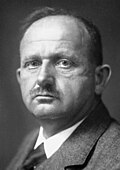
 German Reich
Explanation
Our blood looks red. The red color comes from a tiny dye called heme. Dr. Hans Fischer studied a related substance called haemin and also chlorophyll, the pigment that makes leaves green, to find out what shapes these molecules have. He even succeeded in making haemin in the laboratory. His work helped us understand how our bodies work and how plants perform photosynthesis more clearly.
Related Keywords
haemin
Haemin is the chloride complex of iron(III) protoporphyrin IX, obtained as dark-red crystals when hemoglobin is degraded. Besides acting as a mild oxidant, it is widely used as a standard pigment in many biochemical assays. Because the central iron is in the +3 oxidation state, haemin serves as an important model for studies of ligand exchange and spin-state conversion. Hans Fischer achieved the first total synthesis of a biomolecule containing a transition metal by constructing haemin stepwise from simple building blocks. His accomplishment symbolized the fusion of complex natural-product synthesis and bioinorganic chemistry.
chlorophyll
Chlorophyll is the green pigment that allows plants to harvest light energy for photosynthesis; it consists of a porphyrin macrocycle with a central magnesium ion. When chlorophyll absorbs sunlight in the chloroplast, electrons are excited and the energy is converted into chemical bonds. Several variants such as chlorophyll a and b exist, each with slightly different absorption wavelengths. Fischer produced metal-substituted chlorophyllins and showed how the central metal alters the spectral properties. This work opened avenues toward artificial photosynthetic materials and photocatalyst development.
porphyrin
Porphyrins are large aromatic macrocycles composed of four pyrrole rings linked by methine bridges. Their extensive conjugation makes them strongly absorb visible and ultraviolet light, producing vivid colours. By incorporating a metal ion into the center, the electronic structure changes and a wealth of biological functions such as oxygen transport, electron transfer and light harvesting become possible. Haem, chlorophyll and vitamin B12 are natural examples. Fischer’s investigations laid the foundation of porphyrin chemistry and propelled the rise of coordination chemistry.
total synthesis
Total synthesis is the step-by-step construction of a naturally occurring complex molecule from relatively simple commercially available chemicals. By building the compound in the laboratory, chemists obtain definitive proof of the proposed structure. Fischer’s total synthesis of haemin was among the first successes for a biomolecule that contains a metal ion. The achievement advanced the concept of target-oriented synthesis and encouraged later monumental syntheses such as vitamin B12 and taxol. Today total synthesis is an indispensable technique for drug discovery and the creation of functional molecules.
spectroscopy
Spectroscopy is an analytical technique that studies how matter absorbs or emits light to reveal its structure and properties. Porphyrins possess an intense Soret band, allowing them to be detected in very small quantities by spectroscopic methods. Fischer compared the spectra of his synthetic samples with those of natural specimens to confirm structural identity. The approach remains a standard quality-control tool in both synthetic chemistry and biology. Spectroscopy also underpins medical applications such as pulse oximetry and photodynamic therapy.
bioinorganic chemistry
Bioinorganic chemistry explores the roles of metal ions in living systems. Metal-bearing pigments like haemin and chlorophyll sit at the heart of enzyme catalysis and energy conversion. Fischer’s work was one of the earliest to treat metal porphyrins from an organic-chemistry perspective, opening the door to the field. Research later expanded to cytochromes, nitrogenase and many other metalloproteins. Bioinorganic chemistry now provides the basis for designing new catalysts and pharmaceuticals and is a central pillar of modern chemistry.