1932 Nobel Prize in Chemistry
Reason for Award
for his discoveries and investigations in surface chemistry
Laureates
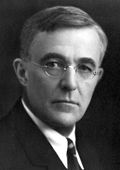
 United States of America
Explanation
The surface of a metal or a piece of glass is a special place, even though we cannot see it with our eyes. When spilled water spreads on a table or soap bubbles form, the surface is doing something important. Irving Langmuir studied how tiny molecules line up or stick to these surfaces. He discovered that sometimes a film just one single molecule thick can form, and that this can make chemical reactions work better. Today this idea helps us when we make medicines or electronic parts.
Related Keywords
surface chemistry
The field that studies chemical phenomena occurring on solid and liquid surfaces. It includes adsorption, catalytic reactions, corrosion, and thin-film growth. Intermolecular forces and charge distributions that are negligible in the bulk dominate here, altering material properties on the sub-nanometer scale. Langmuir’s work established the view that a surface is not merely a boundary but an autonomous phase. Today it underpins applications ranging from semiconductor fabrication and biosensing to energy storage. Advancements in surface analysis, combining electron microscopy with photoelectron spectroscopy, are essential in the discipline.
adsorption
The phenomenon in which molecules from a gas or solution bind physically or chemically to a solid or liquid surface. Physisorption is governed by van der Waals forces and is reversible; chemisorption involves covalent or ionic bonding, is often irreversible, and is exothermic. Adsorption is central to catalysis, gas separation, and purification by activated carbon. The Langmuir adsorption isotherm explains equilibrium when a monolayer forms and is used to quantify specific surface area and estimate adsorption heat. Modern BET theory and DFT-based adsorption models allow analysis of multilayer and porous systems, yet the single-site occupation concept remains a fundamental principle.
Langmuir adsorption isotherm
An empirical equation relating adsorption amount to gas pressure, θ = KP⁄(1+KP). Assuming monolayer formation and independent adsorption sites, the temperature-dependent parameter K yields adsorption energy. The equation can be linearized (1/θ versus 1/P), making it convenient for industrial practice. It is applied to predict catalyst poisoning and selective adsorption, guiding the design of packed adsorption columns. Extensions such as the BET and Temkin isotherms broaden the framework to porous solids and strongly interacting systems.
monolayer
A continuous film whose thickness is roughly one molecule (about 2–5 Å). By spreading amphiphilic molecules with hydrophobic and hydrophilic parts on water and compressing the area, a tightly packed monolayer forms. In the Langmuir–Blodgett technique, this film can be transferred onto a solid substrate, stacking into multilayers. Monolayers allow precise molecular alignment and are used for sensor electrodes, liquid-crystal devices, and as model systems of self-assembled monolayers (SAMs). Analyzing surface tension or pressure–area isotherms reveals phase transitions and domain formation. Recently they play vital roles in chemical modification of topological insulators and other 2-D materials.
catalysis
A catalyst accelerates a reaction without being consumed and its performance strongly depends on the nature of active sites on the surface. Langmuir’s adsorption model led to the idea that reactions proceed through adsorption, surface reaction, and desorption—known as the Langmuir–Hinshelwood mechanism. This enabled optimization of large-scale processes such as ammonia synthesis and petroleum refining. Improving catalytic selectivity requires fine-tuning adsorption energies to stabilize only desired intermediates. Recently, the shape and electronic state of nanoparticles are analyzed by operando techniques and compared with theory to construct activity volcano plots.