1935 Nobel Prize in Chemistry
Reason for Award
Discovery of artificial radioactive elements
Laureates
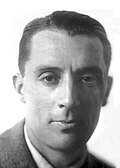
 France

France
Explanation
Everything around us is made of tiny particles called atoms. In the center of an atom is a nucleus, which can sometimes break apart and release energy; that property is called radioactivity. In nature, elements like uranium and radium are radioactive by themselves. Frédéric and Irène Joliot-Curie discovered that by shooting small particles at ordinary metals such as aluminium they could create brand-new radioactive atoms. These are called artificial radioactive elements. Artificial radioactivity is now used as medicines that help doctors see diseases and as tools that help factories inspect products. Many technologies that support our daily lives began with this discovery.
Related Keywords
artificial radioisotope
An artificial radioisotope is a radioactive nuclide that does not occur naturally or exists only in trace amounts and is deliberately synthesized via nuclear reactions in accelerators or reactors. The Joliot-Curies were the first to create such isotopes systematically and measure their half-lives and decay modes. Because scientists can choose half-life and radiation type, a wide variety of applications in medicine, industry, and research have emerged. Cobalt-60 for cancer therapy and fluorine-18 for PET imaging are prime examples. Production requires strict control of target purity, optimized irradiation conditions, and sophisticated radiochemical separation. Disposal and transport are governed by international safety regulations, and end users must be trained in radiation protection.
positron
A positron is a subatomic particle with the same mass as the electron but a positive charge. The Joliot-Curies observed positrons emitted in β+ decay of their artificial isotopes, noting the opposite curvature of tracks in a magnetic field inside a cloud chamber. In matter, a positron annihilates with an electron, emitting two 511 keV gamma photons. This property is exploited in PET (positron emission tomography), greatly improving cancer-diagnostic accuracy. In fundamental physics, positrons are key to antimatter studies and tests of discrete symmetries. Low-energy positron beams are also used to analyze surface defects in materials.
beta-plus decay
Beta-plus decay is a nuclear process in which a proton is converted into a neutron while a positron and a neutrino are emitted. Isotopes such as phosphorus-30 and nitrogen-13, produced by the Joliot-Curies, are textbook examples, and their positron tracks were visualized in cloud chambers. Measurements of decay energy and spectrum shape provided critical tests of Fermi’s weak-interaction theory. In medicine, the gamma photons from positron annihilation are detected by PET scanners to visualize molecular processes inside the body. In engineering, β+ sources are sometimes used for thickness gauging and defect inspection. Because short-lived isotopes lower patient dose and enable rapid diagnosis, logistics from accelerator to hospital is an active area of research.
neutron irradiation
Neutron irradiation involves bombarding materials with neutrons produced in reactors or dedicated sources to induce nuclear reactions. Because neutrons carry no electric charge, they can approach nuclei closely and have high capture cross sections. This makes them highly efficient for large-scale production of radioisotopes used in medicine and industry. Prior to the Joliot-Curies, α bombardment was dominant; subsequent adoption of neutron irradiation enabled mass production. Neutron exposure simultaneously induces activation and embrittlement in structural materials, making damage assessment vital in reactor engineering. In activation analysis, a sample is irradiated by neutrons and the induced activity measured, allowing ultra-sensitive elemental analysis.
nuclear reaction
A nuclear reaction occurs when two or more nuclei or nuclear particles collide and produce new nuclides or particles. The (α,n) reactions demonstrated by the Joliot-Curies are textbook illustrations. Reaction channels such as (α,n), (p,γ), and (n,γ) have specific threshold energies and Q-values. Studying these processes provides insights into binding energy, nuclear structure, and nucleon interactions. In applied science they underpin energy production (fission and fusion), radioisotope manufacture for medicine, and analysis of cosmogenic nuclides. In safety engineering, accurately predicting radiation fields and heat output from reaction products is essential.
tracer technique
The tracer technique uses a minute amount of a radioisotope as a marker to follow the path of materials and molecules. The advent of artificial radioactivity made it possible to label virtually any element, propelling advances in chemistry and biology. For example, administering carbon-14 to plants allows researchers to determine where sugars produced by photosynthesis are transported. In medicine, iodine-131 assesses thyroid function and lutetium-177 treats tumours. In industry, radiotracers locate leaks in pipelines through non-destructive testing. While highly sensitive, the method requires strict radiation protection and measurement accuracy, covered by international regulations.
PET imaging
PET, or positron emission tomography, detects the two 511 keV gamma photons emitted when a positron from β+ decay annihilates with an electron, using opposing detectors to reconstruct a 3-D distribution of the radiopharmaceutical in the body. When fluorine-18 labeled FDG is employed, regions of elevated glucose metabolism, typical of cancer cells, are visualized with high sensitivity, making PET indispensable for early diagnosis and therapy monitoring. PET also serves neuroscience, quantifying receptor distributions and drug kinetics. Recent advances include time-of-flight PET for better resolution and hybrid systems such as PET/MR combining metabolic and structural information. Cyclotrons for tracer synthesis, hot-cells, and QMS instrumentation are commonly integrated within clinical facilities. Ongoing research focuses on detector materials and reconstruction algorithms to lower patient dose while enhancing image quality.
transmutation
Transmutation is the process by which the nucleus of one element undergoes a nuclear reaction and becomes a nucleus of a different element, turning the ancient alchemical dream into scientific reality. The Joliot-Curies demonstrated transmutation by bombarding light elements with α particles, laying the groundwork for artificial radioactivity. Today, accelerator-driven systems and fast reactors are being studied to transmute long-lived nuclear waste into shorter-lived nuclides. In astrophysics, transmutation in stellar interiors drives energy production and the synthesis of elements. Industrially, controlled transmutation has been reported for tailoring thin-film compositions and managing semiconductor impurities. A deep understanding of transmutation underpins nuclear data compilation, reaction modeling, and radiation shielding design, making it a vital topic in both fundamental and applied research.