1943 Nobel Prize in Chemistry
Reason for Award
for his work on the use of isotopes as tracers in the study of chemical processes
Laureates
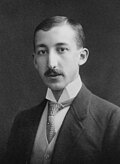
 Kingdom of Hungary
Explanation
When you drop colored water into clear water you can watch the color spread. Dr. Hevesy replaced the “color” with special atoms called isotopes. Isotopes are invisible but slightly heavier, so scientists can find them later with instruments. Using this trick he safely studied how water moves inside plants and where medicine travels in our bodies. Many hospital tests we use today grew out of this idea. It is like a scientific treasure hunt.
Related Keywords
Isotope
Isotopes are atoms with the same atomic number but different mass numbers. They share almost identical chemistry, yet differences in mass or nuclear stability alter their physical behavior and decay properties. Radioactive isotopes emit radiation over time, allowing highly sensitive detection of their location and quantity. Stable isotopes lack radiation, providing safe markers. Hevesy exploited these properties to make invisible material flows visible.
Tracer method
The tracer method introduces a tiny labeled substance to follow the movement of the whole system. Radioactive or stable isotopes serve as labels and are identified by detectors or mass spectrometers. A key advantage is non-destructive, time-resolved measurement. It is applied to reaction mechanism studies, drug pharmacokinetics and geological dating, among others. Hevesy’s work laid the foundation for this methodology.
Radionuclide
Radionuclides are atomic nuclei that spontaneously decay, emitting radiation such as α, β or γ rays. Their half-lives range from milliseconds to millions of years. The emitted energy and particles are easily detected, enabling ultrasensitive analysis. In medicine they are used for PET diagnostics and radioisotope therapy. In tracer studies, choosing a nuclide with suitable half-life and energy is critical.
Metabolic tracing
Metabolic tracing administers nutrients labeled with radioactive or stable isotopes and analyzes their biochemical pathways. Isotope distribution in blood, urine and tissues quantifies uptake, degradation and synthesis rates. It is applied to disease mechanisms and drug efficacy evaluation. Hevesy was first to quantify iron and calcium turnover in vivo. Modern clinical PET and metabolomics trace their roots to this practice.
Mass spectrometry
Mass spectrometry separates and detects ionized molecules by mass-to-charge ratio. Isotope ratio measurements distinguish tiny mass differences with high precision. In stable isotope tracer studies it enables kinetic analysis without radiation. It is widely used in environmental science and food origin verification. Hevesy’s concepts expanded the reach of mass-spectrometric applications.
Radiation safety
Radiation safety focuses on controlling exposure doses to minimize health effects. Even trace radionuclides in tracer experiments require protective measures. Based on guidelines such as ICRP recommendations, shielding, distance and time management are applied. Hevesy contributed to early radiation handling standards. Modern laboratory protocols and medical exposure control build on this foundation.