1947 Nobel Prize in Chemistry
Reason for Award
for his investigations on plant products of biological importance, especially the alkaloids
Laureates
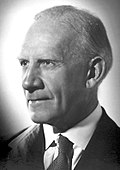
 United Kingdom of Great Britain and Northern Ireland
Explanation
The coffee we drink or gum we chew contains substances called “alkaloids” made by plants. Alkaloids taste bitter but have very strong effects on our bodies. Sir Robert Robinson won the Nobel Prize for finding out what shapes these alkaloids have. He used test tubes and flasks, solving a tiny molecular puzzle through many experiments. Thanks to his work, we can make safer medicines and learn more about the mysteries of plants.
Related Keywords
alkaloids
Alkaloids are nitrogen-containing natural organic compounds, most of which are bitter and pharmacologically active. Some, like morphine and cocaine, are used as analgesics or local anaesthetics, while others, such as nicotine, appear in recreational products. In Robinson’s day structural elucidation tools were scarce, so alkaloids represented an enormous puzzle for chemists. He employed degradation reactions and derivatisation to deduce their skeletons and provided a roadmap for their identification. The outcome accelerated progress in natural-products chemistry and pharmacy.
indole
Indole is a bicyclic aromatic compound in which a benzene ring is fused to a pyrrole ring; it forms the core skeleton of many alkaloids. Robinson improved synthetic routes to indoles, opening shortcuts toward the construction of complex natural products. In studies on strychnine, for example, the indole unit served as a crucial scaffold. Today indole derivatives are ubiquitous in pharmaceuticals, agrochemicals and fluorescent probes. Their widespread use rests upon the fundamental work of Robinson and his contemporaries.
synthetic chemistry
Synthetic chemistry is the discipline of joining small molecules together to build target compounds, and Robinson was one of its pioneers. He devised new reactions, such as the Robinson annulation, which allowed chemists to assemble complex ring systems rapidly. These methods are indispensable today in drug synthesis and materials science. Moreover, he introduced the idea of theoretical reaction planning, bringing strategic thinking into experimental design. That mindset survives in modern computational chemistry and automated synthesis.
biosynthetic pathway
A biosynthetic pathway is the step-by-step route by which organisms use enzymes to create complex natural products. From chemical similarities, Robinson inferred possible biosynthetic schemes for alkaloids and proposed hypotheses such as ‘enzymes might assemble the skeleton in this order.’ Subsequent radiolabelling experiments and enzymatic studies confirmed many of his predictions. His perspective taught chemists the importance of biological evidence and laid the foundation for chemical biology. Modern metabolomics and synthetic biology are direct descendants of that intellectual lineage.
drug development
Drug development is the process of discovering, manufacturing and clinically applying molecules that cure diseases. Alkaloids have long served as medicines—for pain relief or antimalarial therapy—but their high potency often comes with significant side effects. Robinson’s structural elucidations allowed chemists to compare which parts of the molecule conferred efficacy and which contributed to toxicity. Chemists then modified the skeletons to design safer and more effective analogues. Today’s rational drug design philosophy is rooted in the structure-activity studies that began in Robinson’s era.