1954 Nobel Prize in Chemistry
Reason for Award
for his research into the nature of the chemical bond and its application to the elucidation of the structure of complex substances
Laureates
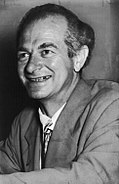
 United States of America
Explanation
Everything around us, like water and food, is made of tiny particles called atoms that hold hands with each other; this holding is the chemical bond. Dr. Pauling studied how atoms hold hands and build shapes. He imagined atoms the way we play with building blocks or origami, figuring out the most stable patterns. Thanks to his work, scientists can design medicines and plastics more safely. His ideas help explain why different materials have different properties.
Related Keywords
chemical bond
A chemical bond is the linkage between atoms arising from shared electrons or electrostatic attraction. Types include covalent, ionic, metallic, and coordinate bonds. Pauling used quantum mechanics to formulate the electron-pair model of covalent bonding, explaining bond angles and lengths theoretically. His ideas integrate hybridization and resonance, providing a framework to predict molecular geometry. The concept remains foundational for molecular design and materials science today.
electronegativity
Electronegativity is a numerical measure of an atom’s ability to attract a shared electron pair, introduced by Pauling. Defined from differences in bond dissociation energies, it increases toward the upper-right corner of the periodic table. Larger electronegativity differences lead to more ionic and polar bonds. Thus, the scale helps predict boiling points, solubility, and chemical reactivity. It is a ubiquitous parameter in education and advanced research alike.
alpha helix
The alpha helix is a protein secondary structure predicted by Pauling from X-ray data and theoretical calculations. The peptide backbone forms a right-handed coil with 3.6 residues per turn (13 atoms per repeat). Parallel C=O···H–N hydrogen bonds stabilize the helix internally. It is common in enzymes and membrane proteins and is a key motif in protein folding. The α-helix is also central in modern drug design and biomaterials engineering.
resonance
Resonance describes electron distributions that cannot be depicted by a single Lewis structure, representing them as a superposition of multiple limiting structures. Pauling noted that resonance energy stabilizes molecules, explaining aromaticity and peptide-bond character. Resonance yields fractional bond orders that predict bond lengths and reactivity accurately. Modern MO and VB methods treat such mixing mathematically. The concept is indispensable for designing aromatic compounds, dyes, and conductive polymers.
valence bond theory
Valence bond (VB) theory treats covalent bonding as overlap of atomic orbitals, and Pauling systematized it. Assuming spin-paired electrons, VB theory introduces resonance among structures, allowing extension to complex molecules. It naturally explains hybridization and electron localization, making it useful in reaction-mechanism studies and molecular magnetism. With modern computing power, hybrid VB-MO calculations now achieve high-accuracy electronic structures. VB theory remains an evolving framework in quantum chemistry.