1956 Nobel Prize in Chemistry
Reason for Award
for their researches on the kinetics of gas-phase chemical reactions, in particular chain reactions
Laureates
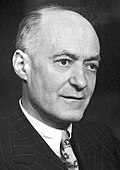
 United Kingdom of Great Britain and Northern Ireland
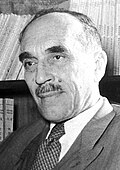
 Soviet Union
Explanation
Think about how a tiny spark can grow into a big flame. Hinshelwood and Semyonov discovered that this spreading fire happens because reactions pass from one molecule to the next like falling dominoes. When gas molecules collide, they create new “excited” molecules called free radicals that in turn hit other molecules. Once one free radical appears, it creates two, then three, and soon the reaction speeds up dramatically. The scientists mixed gases in glass vessels, changed the temperature and pressure, and timed how fast the dominoes fell. Their ideas help us use flames safely in things like car engines and fireworks. Even today we learn from their work to protect energy and the environment.
Related Keywords
chain reaction
A chain reaction is a mechanism in which some reaction products act as intermediates triggering subsequent reactions, causing the process to grow autocatalytically. It comprises initiation, propagation, and termination steps. In branching chains one intermediate creates two or more new intermediates, yielding exponential acceleration. Chain reactions are crucial in gas combustion, radical polymerization, nuclear fission, and more. Hinshelwood and Semyonov formalized the concept, laying the foundation of reaction-network theory. From a control standpoint, enhancing termination suppresses explosions. Modern reaction-design software and atmospheric models embed algorithms that descend from this classical formulation.
free radical
A free radical is an atom or molecular fragment with an unpaired valence electron and therefore extremely high reactivity. Because of the unpaired electron, radicals carry spin and can be detected by EPR. In gas-phase chain reactions, radicals such as •H, •OH, and •Cl are the main carriers propagating the network. Radicals produced by reaction heat are terminated by recombination with walls or third bodies, rates that depend on pressure and temperature. In the atmosphere, •OH acts as the "detergent of the air," oxidizing pollutants. Hinshelwood and Semyonov analyzed time-dependent radical concentrations to explain induction periods and explosion limits. Today, radical control remains central in biomedical chemistry and polymer synthesis.
activation energy
Activation energy is the energy barrier reactants must overcome to become products. In the Arrhenius equation k=Aexp(−E_a/RT) it governs temperature dependence. In branching chain reactions, lower E_a increases the branching coefficient, raising explosion risk. Semyonov's thermal-explosion theory shows that system stability depends on the balance G(E_a,Q) between activation energy and reaction heat. Hinshelwood used experimental E_a values to estimate reaction orders and termination rates, verifying wall effects. Industrial processes manipulate E_a with catalysts or diluent gases to ensure safety. Estimating E_a is also vital in accelerated tests of material degradation and battery life.
explosion limit
The explosion limit defines the temperature, pressure, and composition boundaries where a gas mixture can explode spontaneously. Combustible gases show first, second, and third limits corresponding to chain initiation, thermal branching, and auto-ignition mechanisms. Semyonov introduced critical pressure P_c and temperature T_c, analyzing how branching and thermal diffusion set the limit. Hinshelwood quantified how stronger wall termination shifts the limit to higher pressures. Limit maps are indispensable for explosion-proof plant design. Recent work uses machine learning to predict limits for multicomponent systems rapidly. The concept also extends to battery thermal runaway and dust explosions.
chemical kinetics
Chemical kinetics studies reaction rates and mechanisms in mathematical terms. Rate constants, reaction orders, activation energies, and pathway analyses are central. Hinshelwood and Semyonov extended gas-phase kinetics to non-steady radical models, explaining induction periods and explosions. Their work pioneered numerical integration of complex mechanisms and underlies modern software such as CHEMKIN. Kinetics is indispensable in catalyst development, environmental models, and drug design. With fast computers, multi-scale approaches linking molecular dynamics to reactor models have become standard. Yet the guiding principle remains precise mechanistic formulation validated by experiment.
chain initiation
Chain initiation is the process by which stable reactants are converted into the first reactive intermediates. Heat, light, radiation, or catalysts cleave bonds to create initiators. In gas reactions, sparks or heating dissociate molecules, producing radicals like •H or •Cl. Low initiation efficiency lengthens the induction period and delays rapid acceleration. Hinshelwood showed that wall material and added gases affect initiation efficiency. In photopolymerization and plasma chemistry, initiation control is crucial for product quality. Modeling parameterizes initiation using time-resolved data.
chain branching
Chain branching is a step where one intermediate produces two or more new intermediates, causing exponential growth. An example is •O+H₂→•OH+•H in the H₂+O₂ system. Semyonov showed that explosive behavior occurs when the branching coefficient α exceeds unity. Branching can be controlled by temperature, mixture ratio, and third-body effects, making it key in combustion control and explosive design. In simulations, branching steps create stiff time scales affecting numerical stability. Optical diagnostics such as LIF and CARS measure radical concentrations in real time for model validation. Similar mechanisms operate in material synthesis and secondary atmospheric pollution.
chain termination
Chain termination is the step in which reactive intermediates react with each other, the vessel wall, or a third body, bringing the chain to an end. A faster termination rate keeps the reaction mild and prevents explosions. Hinshelwood modeled wall termination and proposed a pressure-dependence law. Surface energy and adsorption-site density effects are also important in catalysis and exhaust-gas purification. In polymerization, termination controls molecular-weight distribution and material properties. In atmospheric chemistry, NOx reacts with radicals, acting as terminators that suppress smog. Models treat k_t as a combination of diffusion- and chemically controlled processes, with different forms in high- and low-pressure regimes.