1981 Nobel Prize in Chemistry
Reason for Award
for their theories concerning the course of chemical reactions
Laureates
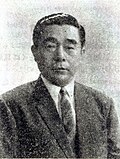
 Japan
Japan
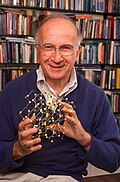
 United States of America,
  Poland
Explanation
Kenichi Fukui and Roald Hoffmann studied the “roads” that electrons travel inside molecules and found a way to predict whether a reaction will happen. Electrons are not tiny balls but clouds, and their shapes decide how molecules stick together or fall apart. Thanks to their work, chemists can now guess in advance, “Will this reaction work?” when making medicines or plastics. It is like looking at LEGO block shapes first and imagining how to build them. This helps chemists save time and materials.
Related Keywords
Frontier Molecular Orbital theory
Frontier Molecular Orbital (FMO) theory is based on the assumption that reactions are governed mainly by the highest occupied (HOMO) and lowest unoccupied (LUMO) orbitals. In organic chemistry, the energy gap and symmetry between these two orbitals dictate reaction rates and product stereochemistry. In the Diels–Alder reaction, for instance, the HOMO of the diene and the LUMO of the dienophile must be energetically and phase-matched. The theory allows qualitative predictions even with modest computational cost, making it a first-approximation tool for many mechanisms. Modern DFT studies still invoke the FMO concept to interpret results.
Woodward–Hoffmann rules
The Woodward–Hoffmann rules are selection rules that decide whether a pericyclic reaction can proceed based on orbital-symmetry conservation. Depending on whether the motion is conrotatory or disrotatory, the product stereochemistry changes. Thermal and photochemical conditions switch the allowedness because of different symmetry considerations under ground and excited states. Group theory involving C2n+1 axes and mirror planes provides the underpinning. The rules let chemists foresee viable pathways in complex natural-product syntheses and serve as a benchmark for computational results today.
HOMO
The HOMO, or highest occupied molecular orbital, is the highest-energy orbital that still contains electrons, marking regions from which electrons are easily donated. In mechanism studies it gauges nucleophilicity. The spatial phase pattern of the HOMO dictates stereoselectivity, and catalyst design often aims to stabilize or activate the HOMO. The long-wavelength edge of a UV-vis spectrum often corresponds to a HOMO→LUMO transition. The concept also guides band-gap engineering in semiconductors and OLED materials.
LUMO
The LUMO, or lowest unoccupied molecular orbital, readily accepts electrons and signals electrophilic sites or vacant catalytic centers. Reactions proceed more easily when the HOMO–LUMO gap is small. In drug design, introducing electron-donating groups tailored to the target’s LUMO increases binding affinity. In photocatalysis, the LUMO acts as the “bucket” for electrons promoted by sunlight. The shape of the LUMO can be scrutinized by comparing X-ray structures with MO calculations.
pericyclic reaction
Pericyclic reactions involve concerted bond making and breaking around a cyclic transition state characterized by a continuous flow of electrons. Electrocyclic reactions, sigmatropic rearrangements, and cycloadditions are key subtypes. The Woodward–Hoffmann rules allow the prediction of their feasibility and stereochemistry, making them staples in constructing key intermediates in natural-product synthesis. Thermal variants proceed via thermal activation, while photochemical variants proceed via an excited state, yielding different products. Quantum-chemical calculations often follow the cyclic transition state via intrinsic reaction coordinate (IRC) analyses.
computational chemistry
Computational chemistry uses quantum mechanics and molecular mechanics to study chemical phenomena numerically. Fukui’s work showed that even simple Hückel-type calculations can discuss reactivity, making him a pioneer of the field. Today, high-accuracy methods like DFT and CCSD(T) are applied to enzyme reactions and materials design. Advances in supercomputers and GPUs allow reaction-path searches for systems with thousands of atoms. Integration with AI is now attracting attention for automated synthesis planning and guided exploration.
orbital symmetry conservation
The principle of orbital-symmetry conservation states that in closed-shell concerted reactions, the total symmetry of electron configuration in the transition state must be conserved relative to reactants and products. Group-theoretically, the direct product of involved orbital representations must reduce to the totally symmetric representation. This allows formal classification of pericyclic reactions as thermally allowed or forbidden. Under photochemical conditions the electron occupancy changes, flipping the symmetry criteria. The rule is a key guideline for choosing catalysts or conditions that promote the allowed pathway selectively.