1985 Nobel Prize in Chemistry
Reason for Award
for the development of direct methods for the determination of crystal structures
Laureates

 United States of America
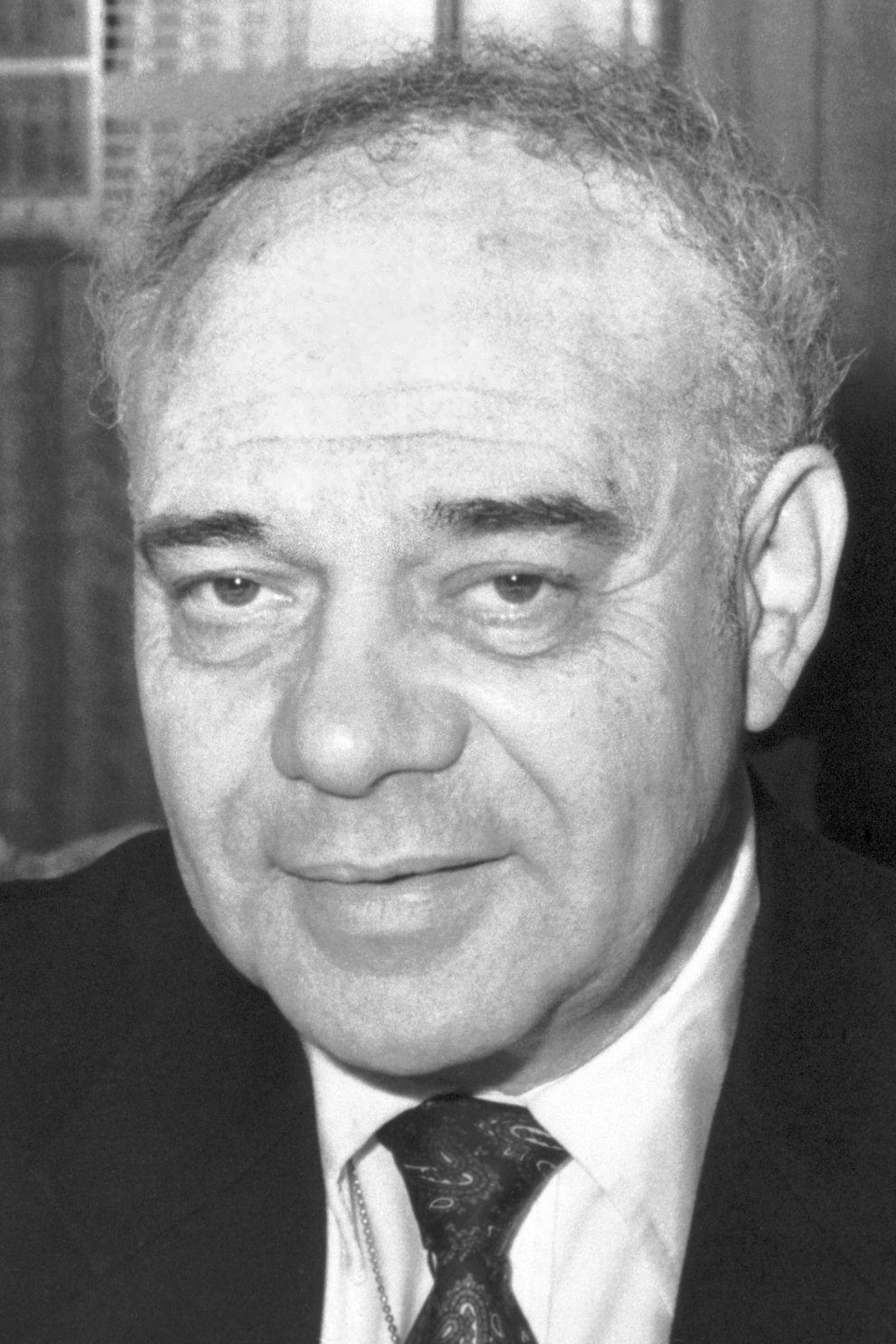
United States of America
Explanation
If you look at sugar or salt under a microscope, you see tiny little shapes that look like miniature gems. That’s because the atoms inside are lined up neatly in what we call a “crystal.” Atoms are far too small to see directly, but when we shine a special light called X-rays on the crystal, we get patterns that hold clues to their arrangement. Herbert Hauptman and Jerome Karle invented a clever way to turn those patterns into numbers and quickly figure out where each atom sits. Thanks to their work, scientists can carefully check the inside shapes of new medicines and the materials that go into smartphones.
Related Keywords
X-ray crystallography
X-ray crystallography is a technique that shines X-rays on a crystal and measures the resulting diffraction pattern to determine the three-dimensional arrangement of atoms. The positions of the spots (reflections) reveal the lattice parameters, while their intensities carry information about electron density. To compute atomic coordinates from the intensities, one needs the phase of each wave, which is not observed experimentally. By estimating the phases with mathematical tools such as direct methods or molecular replacement and performing a Fourier transform, an electron-density map can be obtained. The technique is indispensable in areas ranging from drug discovery and materials science to studies of protein function.
phase problem
The phase problem refers to the fact that diffraction experiments yield only the intensities |F|^2 of structure factors while the complex phases φ are lost, preventing a straightforward inverse Fourier transform. Without phases, no electron-density map and thus no atomic coordinates can be obtained. Several strategies—molecular replacement, anomalous dispersion and direct methods—have been devised, with direct methods being particularly effective for small molecules. Solving the phase problem is the most critical step that determines both workload and success rate in crystallography. Today, hybrid approaches continue to improve phase determination even for large molecules and low-resolution data.
direct methods
Direct methods are probabilistic techniques that infer crystallographic phases directly from X-ray intensity data. Their theoretical backbone was provided by Hauptman and Karle, with the triplet invariants and the tangent formula playing central roles. Implemented in programs such as MULTAN, SHELXS and SIR, they have almost fully automated ab initio structure determination for small molecules. Extensions to electron and powder diffraction enable the analysis of inorganic materials and minute crystals. The conceptual framework also lives on in charge-flipping and dual-space algorithms, which continue to evolve.
Fourier transform
A Fourier transform is a mathematical operation that decomposes and reconstructs waveforms in terms of frequency components. In crystallography, electron density and structure factors are related through a Fourier transformation. Performing the inverse transform requires not only the amplitudes but also the phases of the structure factors. Direct methods are revolutionary because they statistically estimate the missing phases, enabling the inverse Fourier transform. Today, fast Fourier transform (FFT) algorithms allow real-time processing of large datasets.
structure determination
Structure determination is the process of inferring the atomic arrangement of molecules or materials from experimental data. X-rays, electrons and neutrons are among the probes used, and the phase problem is a common bottleneck. With the advent of direct methods, small-molecule structure determination became dramatically faster, making routine verification of organic-synthesis products possible. For biomacromolecules, efficient determination combines molecular replacement, MR-SAD and other techniques. Precise structural information is indispensable for elucidating reaction mechanisms and designing new functional materials, underpinning the whole of modern science and technology.
tangent formula
The tangent formula is the central equation of direct methods, exploiting the phase relationships among three reflections to estimate unknown phases. Because it involves cos and sin terms arranged as an arctangent, the formula inherited its name. Derived probabilistically, it gives heavier weight to reflections with large E values. During iterative phase refinement, the formula is applied tens of thousands of times, guiding the solution toward the phase set with the highest figure of merit. Without it, searching the multi-dimensional phase space would be prohibitively time-consuming, and direct methods could not have become practical.