1986 Nobel Prize in Chemistry
Reason for Award
for their contributions concerning the dynamics of chemical elementary processes
Laureates
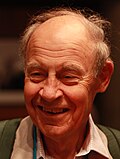
 United States of America

United States of America,  Taiwan, Province of China
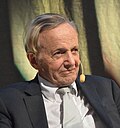
 Canada,
  Hungary
Explanation
When we cook, ingredients mix and create new flavors; in chemistry, tiny particles called molecules collide and form new substances. Mr. Herschbach, Mr. Lee and Mr. Polanyi made very thin beams of molecules and let them crash into each other one by one so they could watch exactly what happened. It is like kicking two soccer balls together and studying how fast and in which direction they bounce. Their work showed which speeds and angles make a chemical reaction happen easily. This knowledge helps us design better medicines and save energy.
Related Keywords
crossed molecular beam
An experimental technique in which two molecular streams intersect at right angles in vacuum and the angular and velocity distribution of products are measured. Because the collisions occur one-on-one, reaction probability and energy partitioning can be obtained directly. Finer beams give better defined orientation and collision energy, increasing analytical accuracy. Developed in the 1960s, it remains the gold standard for gas-phase reaction dynamics. Data from these experiments underpin catalyst design and atmospheric chemistry models.
reaction dynamics
A field that analyzes molecular motion during chemical reactions in terms of time, space and energy. Whereas kinetics deals with average rates, dynamics tracks individual collisions and energy flow. It experimentally tests transition-state structures and barrier heights. Advances in laser spectroscopy and molecular beams enabled high-precision measurements. Today it is tightly integrated with computational chemistry and applied to decipher mechanisms in complex systems.
potential energy surface
A multidimensional surface that gives the energy of a system as a function of nuclear coordinates, serving as a map of reaction pathways. Valleys correspond to stable molecules, passes to transition states. Comparing dynamics data with quantum-chemical calculations tests the surface’s accuracy. Reliable surfaces are essential for predicting reaction rates and product distributions. Machine-learned PESs are now trained on experimental data, combining precision with computational efficiency.
collision energy
The kinetic component of a reacting system, corresponding to the speed of colliding molecules. Many reactions have a threshold: once the collision energy surpasses it, the probability rises sharply. In crossed-beam studies, beam speeds are tuned to control it precisely. Excessively high energies may broaden product distributions and lower selectivity. In industrial processes, balancing energy input against yield makes collision energy an important design parameter.
chemiluminescence
Emission of light when reaction products are formed in an excited state and relax to the ground state. Analyzing the emission spectrum reveals the internal energy distribution of the products. Polanyi used this to measure vibrational energy partitioning and infer transition-state characteristics. The phenomenon is also used in fire detection and bioluminescence studies. Because the setup is relatively simple, it suits real-time tracking of fast reactions.
transition-state theory
A theory that assumes a transient structure at the activation barrier controls reaction speed and computes the rate constant from the probability of crossing that barrier. Molecular-beam experiments directly test the assumed energy and angular momentum distributions in the theory. Classical TST can underestimate tunneling or energy recrossing, but extended and variational versions mitigate these issues. Computational chemistry packages routinely apply TST for automatic reaction-network analysis. It remains a cornerstone for catalyst design and safety evaluations.
differential cross section
The probability that products scatter into a specific angle, containing information on reaction directionality. In beam experiments it is measured via TOF or ion imaging to analyze steric effects and mechanisms. Sharp forward scattering signals an early transition state and direct mechanism, whereas isotropic scattering suggests a complex-forming pathway. Comparing with quantum-scattering calculations highlights needed improvements to potential surfaces. Recent work with laser-cooled molecules extends DCS measurements into lower energy regimes.
state-selected reaction
An experiment in which reactant molecules are prepared in a specific rotational, vibrational, or electronic state, and the dependence of reactivity on that state is examined. Selection is achieved by laser excitation or electric-field deflection. Such studies provided evidence for “mode-specific chemistry,” where excitation of a given mode accelerates reaction. Theoretical models have been refined to include inter-mode coupling. Applications are anticipated in selective modification of semiconductor surfaces and biomolecules.