1987 Nobel Prize in Chemistry
Reason for Award
for their development and use of molecules with structure-specific and highly selective interactions (crown compounds)
Laureates
 United States of America
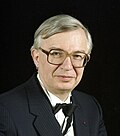
 France
United States of America
Explanation
When you build a sandcastle, choosing blocks that fit perfectly makes the tower strong. Crown ethers are special blocks in chemistry: ring-shaped molecules that can snugly hold metal ions of the right size. Professors Cram, Lehn and Pedersen figured out how to make these rings and showed they can pick up only the desired ion. It is like using a magnet to collect only paper clips. Today this idea helps in batteries, medicines and many everyday technologies.
Related Keywords
crown ether
A cyclic polyether containing oxygen atoms that encapsulates metal ions to form complexes. Selectivity arises from the match between ring size and ionic radius, enabling preferential capture of Na+, K+ and others, and use in phase-transfer catalysis or ion sensing. Synthesised under high-dilution conditions, the host releases guests reversibly by changing environment. Modern derivatives incorporate water solubility or fluorescence. Crown ethers are pivotal building blocks of supramolecular materials.
supramolecular chemistry
A field dealing with assemblies held together by non-covalent interactions, often called ‘chemistry beyond the molecule’. It covers host–guest complexes, self-assembly and molecular machines, and crown ethers were foundational examples. Because it exploits cooperative weak forces, both thermodynamic and kinetic viewpoints are vital. Applications span materials to life sciences and underpin nanotechnology. The 1987 Nobel Prize marks its recognised starting point.
molecular recognition
The phenomenon in which specific molecules associate selectively through complementary size, shape and electronic distribution. In biology it parallels enzyme–substrate and antibody–antigen interactions; in artificial systems crown ethers are landmark examples for metal-ion recognition. Control of binding constants, stereoselectivity and reactivity is central, forming the basis for drug design and sensor development. Molecular recognition underlies self-assembly, enabling construction of higher-order structures and functional materials. External stimuli such as temperature or solvent allow reversible control, a technical advantage.
host–guest chemistry
A field studying the reversible binding between a host molecule possessing a cavity and a guest molecule that fits inside. Binding can involve hydrogen bonds, ionic bonds, π–π interactions and more, allowing fine tuning of selectivity and dynamics. Crown ethers host ions; cucurbiturils or calixarenes host organic molecules, so targets depend on host frameworks. Applications range from controlled drug release and catalytic site organisation to molecular switches. Quantitative evaluation employs NMR titration, ITC and mass spectrometry.
selective ion transport
The process of moving only specific ions across a biological or artificial membrane. Embedding crown ethers or ionophores enables separation of Na+ and K+, producing potential differences or sensing signals and leading to bio-inspired energy devices. Selectivity is governed by host cavity size and hydrophobic barrier thickness. The technology is expected to contribute to desalination and highly efficient biosensors.
synthetic strategy
The combination of reaction design and condition selection to obtain a target molecule efficiently. In crown-ether synthesis, high-dilution techniques prevent polymeric by-products and are key to cyclic yield. Protecting-group choice and stereochemical control are essential for building complex hosts. Recent flow and automated methods allow easy scale-up. Advances in synthetic strategy dictate the pace of supramolecular chemistry progress.
conformation control
The deliberate fixing or steering of a molecule’s spatial conformation to optimise function. In Cram’s carcerands, methine bridges lock the cyclic framework, giving high binding selectivity. By using steric hindrance or hydrogen-bond networks, foldable molecular switches can be designed. The concept applies to protein-folding mimics and stimulus-responsive materials. Structural analysis usually combines X-ray crystallography with computational chemistry.
inclusion compound
A complex in which a guest resides within the spatial lattice of a host without forming independent chemical bonds. Crown-ether complexes are inclusion systems in solution, while cyclodextrins or urea inclusion compounds are common solids. Inclusion can immobilise volatile substances or release fragrances slowly. It is commercially used in taste-masking drugs and slow-release agrochemicals. Crystal engineering and interaction analysis are key to design.