1990 Nobel Prize in Chemistry
Reason for Award
for his development of the theory and methodology of organic synthesis
Laureates
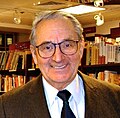
 United States of America
Explanation
Molecules are like Lego blocks made of tiny pieces. Dr. Corey invented a special way to build any molecule by first drawing the final picture and then breaking it down step-by-step in reverse. It is like looking at a finished Lego castle and deciding which pieces to remove in what order. Thanks to this idea, planning how to make new medicines and plastics became much easier. Chemists all over the world now use his method to create things that improve our daily lives.
Related Keywords
organic synthesis
The construction of carbon-based compounds through chemical reactions. It underpins the laboratory recreation of natural products and the design of new materials and medicines. Originating with Wöhler’s urea synthesis in the 19th century, multistep synthesis became commonplace by the mid-20th century. Corey’s theory organized the field into a logical system that enables any chemist to plan complex molecules. Today it integrates with catalysis and computational chemistry toward sustainable methods. It is a core science supporting public health and industry.
retrosynthetic analysis
A mental strategy that virtually cleaves a target molecule backward until simple precursors are reached. Systematized by Corey, it became the standard of synthetic planning. Each cleavage step, called a transformation, corresponds to a real reaction in the forward direction. Because the process forms a tree, alternate routes can be compared and shortest paths extracted. Computer implementation is advancing, leading to AI systems that automatically propose syntheses. It is the starting point of rational route design.
total synthesis of natural products
A field devoted to constructing complex molecules produced in nature entirely from simple starting materials in the laboratory. It is essential for structure proof, biological testing, and supplying leads for drug development. Corey pioneered groundbreaking routes to prostaglandins and taxane precursors. Total syntheses often involve dozens of steps, requiring optimization of yield, selectivity, and safety. Hybrid approaches that combine chemical and biosynthetic steps are emerging to improve efficiency. It remains the ultimate test of a chemist’s creativity and skill.
protecting group
A chemical tag temporarily attached to mask a sensitive functional group during synthesis. It prevents undesired side reactions and enables selective transformations. Corey systematized protecting-group tactics and demonstrated strategic placement in complex syntheses. The balance between deprotection conditions and stability is critical, and overuse increases step count. Green-chemistry considerations encourage protecting-group-free routes when possible. Proper choice heavily influences synthetic efficiency and environmental impact.
asymmetric catalyst
A catalyst that preferentially forms only one enantiomer of a chiral product. Enantioselectivity is critical for the quality of medicines and flavors. Corey’s systems, such as the CBS catalyst, combine high enantioselectivity with broad applicability. Because asymmetric catalysts are used in small amounts and can be recycled, they are economically and environmentally attractive. Computational design is producing new metal complexes and organocatalysts at a rapid pace. They are central tools for stereochemical control in modern synthesis.
computer-aided synthesis design
Technology that encodes retrosynthetic rules into algorithms so software can propose synthesis routes automatically. Originating from Corey’s ideas, early programs like CAMEO and LHASA were created. Today AI-powered platforms such as Chematica and ASAP search millions of reactions to suggest optimal pathways. Coupled with laboratory robots, efforts are underway to automate the entire cycle from planning to execution. Researchers can then focus on strategic decisions and creative ideas, greatly accelerating development. It is expected to be a key technology for future molecular innovation.
CBS catalyst
A chiral oxazaborolidine catalyst developed by Corey, Bakshi, and Shibata. It delivers high enantioselectivity in the asymmetric reduction of ketones. Prepared easily from inexpensive boron sources and amino alcohols, it is used on an industrial scale. Low steric hindrance allows application to a wide range of substrates. Fine-tuning of stereoelectronic effects controls selectivity and permits low catalyst loadings. It is a textbook example emblematic of asymmetric synthesis.