1999 Nobel Prize in Chemistry
Reason for Award
for his studies of the transition states of chemical reactions using femtosecond spectroscopy
Laureates
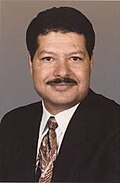
 United States of America,
  Egypt
Egypt
Explanation
When we cook, we can watch ingredients change slowly with our eyes, but in the world of molecules changes happen in a million-billionth of a second. Dr. Zewail used an extremely fast light called a femtosecond laser to “take pictures” of this instant. Thanks to his idea, scientists could see the in-between shapes of molecules as they join or break apart. This slow-motion view of chemistry helps people design better medicines and new materials.
Related Keywords
femtosecond
A femtosecond is 10⁻¹⁵ seconds—one quadrillionth of a second. Molecular vibrations and bond making or breaking occur on this timescale, so femtosecond resolution is essential for direct observation. In the 1980s, titanium-sapphire lasers and pulse-compression techniques made laboratory femtosecond pulses possible. Such pulses have broad bandwidth and high peak power, inducing nonlinear optical phenomena like multiphoton absorption. Zewail’s femtochemistry uses this tiny time unit to film chemical reactions in slow motion.
pump–probe spectroscopy
Pump–probe spectroscopy employs two laser pulses for time-resolved measurements. The first pump pulse excites the sample and starts the reaction, while a delayed probe pulse interrogates the state at a chosen instant. By varying the delay and recording spectra, researchers scan the reaction’s temporal evolution. The data appear as a two-dimensional map of time versus energy, from which transition states and intermediates can be extracted. The method is widely applied in materials science, biophotonics, and semiconductor physics as well as chemistry.
transition state
The transition state is the highest-energy structure located between reactants and products. The activation energy of a reaction is defined by the energy gap up to this point and thus governs the reaction rate. For decades it could only be inferred computationally and was deemed experimentally invisible, but femtosecond techniques now allow direct observation. Knowing the transition state accelerates catalyst design and process optimization. Zewail’s work moved transition-state research from theory into experimental reality.
ultrashort pulse laser
An ultrashort pulse laser emits pulses shorter than a picosecond; femtosecond and attosecond pulses are key examples. The shorter the pulse, the higher its peak power, enabling nonlinear processes such as multiphoton absorption and high-harmonic generation. Pulse duration is controlled via pulse compression, dispersion compensation, and cavity design. Zewail was among the first to apply ultrashort pulses to observe chemical reactions, opening dynamic structural chemistry. Today such lasers are also used in material processing, medical diagnostics, and telecommunications.
femtochemistry
Femtochemistry, a term coined by Zewail, studies chemical reactions with femtosecond resolution. It tracks bond making and breaking, energy transfer, and electronic excitation in real time, experimentally validating quantum-mechanical predictions. Systems from gas and liquid phases to solid surfaces and biomolecules are investigated. Insights are applied to new catalysts, solar-cell materials, and ultrafast optical switches. Recent integration with attosecond science aims at simultaneous control of electronic and nuclear motion.
reaction dynamics
Reaction dynamics analyzes reaction pathways and rates at the molecular level. Besides kinetics and RRKM theory, quantum wave-packet calculations using the time-dependent Schrödinger equation are key tools. Femtosecond spectroscopy tests these theories experimentally, revealing non-statistical branching and coherent effects. Understanding dynamics informs macroscopic phenomena such as bioenergy conversion, atmospheric chemistry, and combustion. Zewail’s work bridged experiment and theory, turning dynamics into a truly quantitative science.
mode-selective reaction control
Mode-selective reaction control excites specific vibrational modes of a molecule to steer the reaction pathway. Shaping ultrashort laser pulses delivers energy locally to stretching or bending modes. Using femtosecond IR pulses, Zewail demonstrated higher yields of desired products in an isomerization reaction. The concept, also called coherent control, exploits quantum interference to enhance chemical selectivity. It is expected to underpin precise manipulation of complex biomolecular reactions and nanoscale self-assembly in the future.