2003 Nobel Prize in Chemistry(2)
Reason for Award
Discoveries concerning channels in cell membranes (structural and mechanistic studies of ion channels)
Laureates
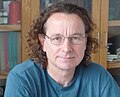
 United States of America
Explanation
We can move and think because tiny electric currents flow inside our cells. The doors that create those currents are called "ion channels." Roderick MacKinnon studied how these doors look, down to the level where atoms are visible. He focused on a channel that lets potassium, a kind of salt, pass and explained how it selects only the right particles. This discovery helps us understand things like heartbeat and brain activity.
Related Keywords
Ion channel
Ion channels are membrane proteins that selectively conduct ions, generating electrical signals and regulating osmotic balance. Their gating is controlled by voltage, ligands, or mechanical stimuli. Conductance rates often exceed 10⁸ ions s⁻¹, rivaling the fastest enzymatic reactions. Channel dysfunctions, collectively called channelopathies, cause epilepsy, arrhythmia, cystic fibrosis, and more. They are central targets in clinical therapy and drug discovery.
Selectivity filter
The selectivity filter is the narrowest region of an ion channel that discriminates specific ions. In potassium channels, the consensus TVGYG sequence uses carbonyl oxygens to replace water and dehydrate the ion. Å-scale geometry excludes Na⁺ while allowing K⁺. Minor mutations can drastically alter conductance and selectivity, often causing disease. Filter flexibility and ion occupancy dynamics are crucial for high-speed conduction.
Knock-on mechanism
The knock-on mechanism posits that several ions line up within a potassium channel and electrostatically push each other through. Ions occupy binding sites S0–S4 in the selectivity filter; when a new K⁺ enters from the outside, inner ions are displaced inward. This concerted motion enables rapid and energy-efficient conduction. Crystallography and molecular dynamics support the model. Sodium channels may employ different permeation schemes, prompting comparative studies.
Voltage-sensing domain
The voltage-sensing domain (VSD) comprises helices S1–S4, with multiple positively charged residues on S4 detecting membrane-potential changes. Voltage shifts cause S4 twisting and translation, transmitting force via linkers to open or close the gate. Competing hypotheses include paddle and sliding-helix models. VSDs are engineered with fluorescent proteins to create voltage probes. Disease mutations lead to hyper-excitability and long-QT syndrome.
X-ray crystallography
X-ray crystallography determines atomic coordinates by analyzing diffraction patterns from protein crystals. Crystallizing membrane proteins is challenging; MacKinnon optimized detergent environments mimicking lipid bilayers to obtain high-resolution KcsA crystals. The resulting structures provided direct evidence for functional mechanisms and complement simulations and pharmacology. The method remains vital for channel and transporter analysis, and when combined with cryo-EM, yields enhanced dynamic insights.
Channelopathy
Channelopathies are diseases caused by mutations in ion-channel genes or their regulators. Examples include long-QT syndrome, periodic paralysis, and cystic fibrosis. Structural data help map mutations to functional defects. Structure-guided drug discovery is advancing, with selective blockers or modulators in clinical trials. Gene therapy and RNA interference are being explored as next-generation treatments.