2006 Nobel Prize in Chemistry
Reason for Award
for his studies of the molecular basis of eukaryotic transcription
Laureates
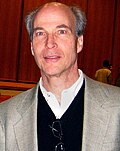
 United States of America
Explanation
Inside our cells there is a library of plans called DNA. Because the plans are precious, they can’t leave the library. The cell therefore makes a copy, called messenger-RNA, of only the pages it needs and sends that copy to the cell’s protein factories. Roger Kornberg studied exactly how this copying happens. He found that a special protein machine called RNA polymerase II acts like the copier, and he managed to take picture-like snapshots of the machine at work.
Related Keywords
transcription
The process of copying genetic information from DNA into RNA. In eukaryotes it is carried out mainly by RNA polymerase II together with numerous transcription factors and chromatin modifications. Without proper transcription, protein synthesis ceases and the cell dies. Malfunctions are linked to cancer, inflammation and many other diseases, making transcription a major drug target.
RNA polymerase II
The multi-subunit enzyme that synthesizes mRNA in eukaryotes. Kornberg solved its 2.8 Å crystal structure, revealing how the trigger loop and bridge helix provide nucleotide selectivity and drive translocation. Its C-terminal domain (CTD) consists of repeats whose phosphorylation state changes during different transcription stages, recruiting various factors. Pol II also coordinates nucleosome traversal and RNA processing.
Mediator complex
A >20-subunit transcriptional hub identified by Kornberg. It relays signals from enhancer-bound regulators to Pol II, switching transcription on or off. Consists of Head, Middle, Tail and Kinase modules that rearrange upon binding to the Pol II CTD. Many disease-linked mutations reside in Mediator, making it an emerging drug target.
messenger RNA (mRNA)
A single-stranded RNA copy of a gene that carries genetic information to ribosomes. In eukaryotes it undergoes 5′-capping, splicing and 3′-polyadenylation. While mRNA vaccines exemplify its medical use, understanding its decay rates and translational efficiency remains a central research topic.
chromatin
The higher-order structure formed by DNA and histone proteins. Nucleosome repositioning and histone modifications regulate transcriptional activity. Pol II temporarily opens nucleosomes as it passes, linking transcription directly to epigenetics. Chromatin misregulation is tightly associated with cancer and ageing.
eukaryote
Organisms whose cells contain a nucleus that houses DNA. Animals, plants and yeast are examples. Because transcription and translation are separated by the nuclear envelope, transcriptional regulation is multi-layered and highly complex. Kornberg’s work provided the first atomic-level view of this eukaryote-specific transcription machinery.
structural biology
A field that determines three-dimensional structures of proteins and nucleic acids to relate them to function, using X-ray crystallography, cryo-EM, NMR and more. Kornberg pioneered a ‘freeze and snapshot’ approach to visualize the dynamic transcription process, expanding the scope of structural biology. Such structural data are indispensable for rational drug design.
DNA
Deoxyribonucleic acid, the double-helix molecule that stores life’s blueprint using a four-letter code (A, T, G, C). During transcription, the helix unwinds and one strand serves as a template. Sequence mutations or chemical modifications affect transcription efficiency, contributing to genetic diseases and epigenetic regulation. Understanding the mechanisms that ensure accurate DNA reading underpins medicine and biotechnology.