2012 Nobel Prize in Chemistry
Reason for Award
for studies of G-protein-coupled receptors (GPCRs)
Laureates
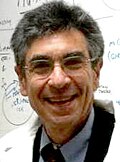
 United States of America

United States of America
Explanation
Cells in our body have tiny “antennae” that catch signals from the outside world. These antennae are proteins called GPCRs. When a signal molecule like adrenaline sticks to a GPCR, your heart beats faster or your breathing opens up. Dr. Lefkowitz and Dr. Kobilka found out what these antennae look like and how they pass the message inside the cell. Thanks to their work, medicines can now be designed to work more precisely.
Related Keywords
G-protein-coupled receptor
A seven-transmembrane helical sensor embedded in the cell membrane that detects diverse stimuli such as hormones, light and odorants. Ligand binding induces conformational changes that activate intracellular G proteins to relay signals. About 800 GPCRs exist in humans and account for over two-thirds of all drug targets. Evolutionarily conserved, they exhibit complex regulation including biased signaling and oligomerization. Advances in structural biology and computational science are accelerating development of highly selective modulators.
Signal transduction
The process by which a cell receives external information and triggers a cascade of chemical reactions that generate a response. In GPCRs, the sequence proceeds from ligand binding to receptor conformational change, G-protein activation and second messenger production. Kinetics and amplitude are finely tuned by kinases, phosphorylation and β-arrestin engagement. Malfunctions contribute to heart failure, psychiatric disorders and cancer. Deeper insight enables design of pathway-specific therapeutics.
β-adrenergic receptor
A prototypical GPCR that binds adrenaline and noradrenaline to control fight-or-flight responses such as increased heart rate and bronchodilation. Three subtypes (β1, β2, β3) differ in tissue distribution and pharmacology. Lefkowitz and Kobilka elucidated atomic-level determinants of ligand selectivity and activation. Numerous drugs, including beta-blockers and bronchodilators, target these receptors. Current research explores biased ligands to reduce side effects.
X-ray crystallography
A structural technique where X-rays are diffracted through a protein crystal and the resulting pattern is used to calculate atomic positions. Membrane-embedded GPCRs are hard to crystallize, requiring lipidic cubic phase methods and stabilizing mutations. Kobilka obtained crystals of the active β2AR–G protein complex and solved it at 3.2 Å, revealing the receptor–G protein interface and allosteric pathways. Cryo-EM has recently become a complementary technique for such challenging targets.
β-arrestin
A regulatory protein that binds phosphorylated GPCRs, blocks G-protein coupling and terminates signaling, while also initiating its own distinct pathways, a phenomenon known as biased signaling. Lefkowitz discovered β-arrestin and formulated the GPCR desensitization model. β-arrestin-selective ligands are being explored as drugs with fewer side effects. Structural biology and mass spectrometry are advancing understanding of its interaction dynamics.
Seven-transmembrane receptor
An alternative name for GPCRs that highlights their seven trans-membrane helices. It encompasses rhodopsin, taste receptors and many others, underpinning signaling diversity. Structural studies show that subtle rotations or outward movements of the helices trigger activation. Closely related receptors may exhibit dramatically different ligand specificities due to sequence variations. The term is frequently used when discussing G-protein-independent biased pathways.
Ligand
A molecule that binds to a receptor to switch it on or off. Ligands include hormones, drugs and odorants among many others. In GPCRs, the binding pocket’s architecture allows different ligands to induce biased signaling. Designing highly selective ligands requires understanding hydrogen-bond networks and hydrophobic interactions within the pocket. Computational design and structural databases are speeding up the search for novel ligands.
Drug design
A research field that designs drugs with high target specificity and fewer side effects by exploiting three-dimensional structures and activation pathways of disease-related GPCRs. Methods include structure-based virtual screening, fragment-based discovery and AI-driven molecule generation. The β2AR structure, the first “active GPCR” template, revolutionized SBDD. Development of biased ligands and allosteric modulators is a key next-generation strategy. Clinical successes include biased μ-opioid receptor agonists for pain management.