1901 Nobel Prize in Literature
Reason for Award
in special recognition of his poetic composition, which gives evidence of lofty idealism, artistic perfection and a rare combination of the qualities of both heart and intellect
Laureates
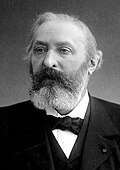
 France
Explanation
The Nobel Prize in Literature is a world-famous award given to people who write wonderful poems or stories. The very first winner was a French poet named Sully Prudhomme. His poems use gentle words and pleasing rhythms to share feelings and hopes. Prudhomme cared not only about feelings but also about thinking, so he used both heart and mind when he wrote. Readers therefore feel joy and also stop to think. In a poem about a broken vase, for example, he quietly shows the sadness of losing something precious. The Nobel Committee praised this high ideal and beauty and gave him the prize.
Related Keywords
Idealism
Idealism is a worldview that seeks values and states higher than the imperfect real world. In Prudhomme’s oeuvre themes such as human nobility and ethical harmony recur persistently. He advocated spiritual values through poetry at a time dominated by scientific rationalism. By rendering abstract ideals in musical language he invited readers to experience inner elevation. This is why the Nobel Committee highlighted his lofty idealism.
Parnassian movement
The Parnassian movement was a group of late-nineteenth-century French poets who prized technical perfection and objectivity. They sought sculptural beauty of form rather than torrents of emotion and paved the way toward Symbolism. Prudhomme belonged to this circle yet maintained his own stance by not excluding inner themes. Consequently his works show a coexistence of strict form and subtle feeling. Studying Parnassian history makes his innovations stand out more clearly.
Sonnet
The sonnet is a fourteen-line fixed form poem, originating in Italy and flourishing in France. Its strict rhythm and rhyme scheme provide a stage to showcase a poet’s craftsmanship. Prudhomme used the sonnet to condense philosophical propositions, fusing heart and intellect. Precisely because of its constraints, word choice and sound stand out sharply. Reading his sonnets lets one feel the refinement of French versification.
Philosophical poetry
Philosophical poetry is a genre that questions being and truth, running logic and sensation in parallel. Prudhomme adopted Cartesian doubt and teleology as themes and turned poetry into an instrument of reflection. He combined metaphors with abstract ideas, inviting readers into an intellectual dialogue. His work does not stop at emotion but repeatedly constructs and deconstructs concepts. Such efforts influenced twentieth-century philosophical modernism.
Artistic perfection
Artistic perfection refers to a state in which a work’s form, content and technique are harmonized at a high level. Prudhomme’s poetry is known for meticulous metrics, delicate phonetics and lucid structure. These qualities simultaneously stimulate intellect and emotion, yielding a complete aesthetic experience. The Nobel Committee compared his technique to music and praised its precision. Studying artistic perfection provides an important lens for literary analysis.