1902 Nobel Prize in Literature
Reason for Award
the greatest living master of the art of historical writing, with special reference to his monumental work, A History of Rome
Laureates
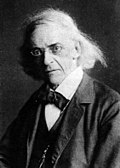
 Germany
Explanation
Theodor Mommsen was a person who studied the stories of ancient Rome in great detail and put them into a book. He read letters carved on marble and old documents to learn about the daily life of Romans. His results were written in a big book called “History of Rome,” which tells events like an exciting adventure story. The book is used in history classes around the world and has helped many people fall in love with the past. That is why Mommsen was given the Nobel Prize in Literature as a master storyteller of history.
Related Keywords
History of Rome
History of Rome, published between 1854 and 1856, is Mommsen’s magnum opus in three volumes covering Rome’s rise from its republican beginnings to Caesar’s dictatorship. By meticulously analyzing inscriptions, legal texts, and literary sources, he balanced narrative appeal with rigorous source criticism. The work is notable for its positive portrayal of Caesar as a modern-style leader while sharply criticizing aristocratic oligarchy. By integrating political, economic, social, and religious aspects, it set the framework for subsequent Roman studies. Appearing during the era of nation-state formation, it encouraged many readers to view ancient Rome through the lens of their own national histories. The blend of literary flair and scholarly depth in this work lay at the heart of the Nobel Committee’s decision.
Historiography
Historiography is the field that studies how history is investigated, written, and interpreted. Mommsen presented a new form of historiography that combined strict source criticism with eloquent narrative. Grounding his work in primary sources, he treated history as a scientific inquiry by logically linking causes and effects. At the same time, he preserved a compelling narrative structure, showing that writing history is also an act of literary creation. His method bridged the rigorous Rankean tradition and the emotional depth of Romantic writing, influencing generations of historians. The award of a Nobel Prize in Literature to a historian highlighted the broad social significance of historiography.
Epigraphy
Epigraphy is the study of inscriptions engraved on stone, metal, or other durable materials in order to elucidate history and language. Mommsen organized an extensive survey of Latin inscriptions and took the lead in compiling the Corpus Inscriptionum Latinarum (CIL). The CIL, the first comprehensive database of its kind, numbers and classifies inscriptions by geography, chronology, and content. Compared with literary texts, inscriptions are less susceptible to later alteration and thus provide direct evidence for administrative, military, and religious practices. By analyzing abbreviations, dialectal variations, and letterforms, Mommsen quantitatively clarified social stratification and migration patterns in Roman society. Subsequent epigraphic research depends heavily on his methodology and data foundation.
Roman Law
Roman Law is the legal system that developed in ancient Rome and later became the foundation of continental European civil law. Trained as a jurist, Mommsen studied fragments of classical jurists and worked on projects such as the reconstruction of the Institutes. He interpreted Roman Law historically, linking legal norms to political and economic structures. By analyzing the relationship between civil law and state power, he convincingly demonstrated institutional changes during the late Republic. His viewpoint is regarded as a forerunner of legal history that situates law within social contexts. Modern comparative law and international legal debates still draw on insights that Mommsen gained through his analysis of Roman Law.
Classical Philology
Classical Philology is the discipline that edits, interprets, and contextualizes texts written in Greek and Latin. Through etymological analysis and close study of grammatical details, Mommsen brought philological precision into historical narrative. By comparing variant readings in inscriptions and papyrus fragments, he verified textual reliability and set a standard for critical editions. He used philological findings to clarify Roman modes of thought and social norms, enriching historical interpretation. Practicing interdisciplinary cooperation between literary studies and history at an early stage, he also influenced university curriculum reform. Contemporary digital philology projects continue to inherit Mommsen’s source-oriented and meticulous analytical spirit.