1903 Nobel Prize in Literature
Reason for Award
as a tribute to his noble, magnificent and versatile poetry, which has always been distinguished by both the freshness of its inspiration and the rare purity of its spirit
Laureates
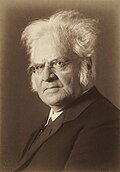
 Norway
Explanation
Bjørnson was a Norwegian writer who created many beautiful poems. His poems vividly describe nature and people’s feelings. When you read them, you can almost smell the forest and see the mountains. He used gentle words to show how important it is for people to live freely. Because of this, his works are still loved in Norway as songs and stories today. The Nobel Prize in Literature honored him for this pure and fresh inspiration.
Related Keywords
Norwegian National Romanticism
A 19th-century ideological movement that celebrated Norway’s distinct culture, raising national consciousness through folk songs and nature imagery. Bjørnson, as a leading figure, idealized rural life and history in his works to foster unity. Along with Ibsen and others, he created a regional variant of European Romanticism. The movement spread to language reform, visual arts, and music, culturally bolstering Norway’s 1905 independence. The Nobel citation’s reference to freshness and purity directly mirrors the ethos of National Romanticism.
“Ja, vi elsker dette landet”
A national anthem whose lyrics were written by Bjørnson in 1864, translated as “Yes, we love this country.” The text praises mountains and fjords and honors the ancestors’ fight for freedom. After the dissolution of the Denmark–Norway union, it helped consolidate national consciousness. It is still sung at sports events and civic ceremonies, highlighting Bjørnson’s cultural influence. Scholars study it as an example of lyrical technique tightly interwoven with political messaging.
Liberal Movement
Alongside his literary career, Bjørnson wrote political essays and delivered speeches advocating parliamentary democracy and press freedom. He influenced the formation of Norway’s Liberal Party, gaining support across urban and rural communities. His works addressed women’s and workers’ rights, signaling a need for social reform. In the 1880s he lectured throughout Europe, discussing minority issues from an internationalist viewpoint. This political engagement embodies the “noble” and “versatile” qualities cited by the Nobel Committee.
Playwriting
Bjørnson wrote numerous plays, advancing Norwegian theatre. Works like “The New System” and “The Editor” were pioneering social-problem dramas. Realistic dialogue and everyday characters elicited audience empathy, turning the stage into a forum for public debate. His methods influenced Ibsen, Strindberg, and the Nordic realist tradition. The Nobel description of “versatile poetry” also acknowledges this dramatic power.
Poetic Realism
A Nordic literary current of the late 19th century that combines Romantic emotion with realist social observation. Bjørnson epitomized it by embedding real social issues within nature-focused and folkloric motifs. Detailed scenery coexists with idealistic messages, allowing multilayered readings. The technique influenced later Nobel laureate Knut Hamsun and others. Comparative literature now studies it as a nexus between nation-building and artistic expression.
Language Struggle (Landsmål vs. Riksmål)
In 19th-century Norway, a heated debate arose over adopting Danish-based Riksmål or rural-dialect-based Landsmål (later Nynorsk) as the standard language. Bjørnson sought to bridge the divide, skillfully employing vocabulary from both in his texts. His stance respected linguistic diversity and highlighted the need for cultural flexibility in national unification. The issue persists in Norway today, and his mediating approach is still cited as a dialogic model. The Nobel praise of “rare purity” can also be read as acknowledging this linguistic integrity.