1906 Nobel Prize in Literature
Reason for Award
not only in consideration of his deep learning and critical research, but above all as a tribute to the creative energy, freshness of style, and lyrical force which characterize his poetic masterpieces
Laureates
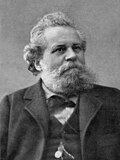
 Italy
Italy
Explanation
Carducci was an Italian poet. He studied old Greek and Roman poems and then wrote new Italian poems with lively rhythms. Just like a school textbook uses clear words so everyone can read it, his poems give readers strength and energy. He chose each word carefully so that people would enjoy the Italian language more. Because of these efforts, people around the world praised him and he received the Nobel Prize.
Related Keywords
lyric poetry
Lyric poetry refers to verse that expresses the poet’s personal feelings or moods. Carducci’s work covers patriotism, praise of nature and intimate family emotions, all rendered with strict formal beauty. He paid close attention to rhythm and sound, using the natural accent of Italian to craft melodious lines. This lyrical quality resonated with readers and injected new vitality into Italian literature. The Nobel committee’s emphasis on his "lyrical force" reflects its appreciation of his mastery of the form.
Odi barbare
"Odi barbare" ("Barbarian Odes"), published from 1877 onward, is Carducci’s signature collection. It introduces classical Latin metres into Italian and experiments with blending quantitative and accentual prosody. The poems celebrate historical heroes and natural landscapes, mirroring the hopes and anxieties of post-unification Italy. The term "barbarian" ironically acknowledges how Latin rhythms sounded alien to contemporary ears. The innovative metrics profoundly influenced later Italian poetry.
Risorgimento
The Risorgimento was the political and social movement that transformed a fragmented peninsula into a unified Italian state in the 19th century. Carducci supported the movement, urging national unity and freedom through his poems and speeches. His patriotic verse became a moral pillar for the new Italy, influencing many citizens and students. Even after unification, he used poetry to defend republican values and criticize monarchy and clerical power. The Risorgimento ideal is closely tied to the "creative energy" cited in his Nobel award.
classical poetic forms
Classical poetic forms refer to metres and stanza types from ancient Greece and Rome, such as the hexameter and the Sapphic stanza. Carducci transplanted these into Italian, inventing techniques to reconcile vowel quantity with stress accent. The result expanded the musical possibilities of Italian verse and offered readers a novel auditory experience. His reinterpretation of classical forms also aligned with the wider Neo-classical revival in Europe, boosting his international reputation. The Nobel committee’s praise for the "freshness of style" reflects this formal innovation.
standardization of Italian language
During the 19th century, Italy grappled with multiple dialects and the need for a unified literary language. Carducci worked to refine a Tuscan-based standard through lectures and criticism, promoting consistent usage. His poetry, while rhetorically sophisticated, employed clear vocabulary that reached a broad readership and served as a model for school textbooks. Language standardization aided the creation of national consciousness and cultural cohesion. The Nobel recognition implicitly acknowledges this sociolinguistic contribution.
literary criticism
Carducci was not only a poet but also a distinguished critic who studied authors from Dante to Mazzini. His criticism combined rigorous archival research with acute aesthetic judgment, setting standards for 19th-century Italian literary scholarship. Lecture notes from the University of Bologna influenced later philologists and anticipated comparative-literary approaches. His critical activity provided a creative foundation for his own poetry, demonstrating the interplay between art and scholarship. The Nobel citation’s reference to "deep learning" points directly to these critical achievements.
anticlericalism
After Italian unification, the balance of power between the new state and the Catholic Church became a heated issue. Carducci supported a secular state and, in provocative poems such as "Hymn to Satan," criticized clerical interference in politics. His stance represented liberal intellectual opinion and influenced students and workers alike. Although often controversial, his works energized debates on freedom of expression. This position at the crossroads of religion and culture is also admired as a form of civic courage.
Rime nuove
"Rime nuove" ("New Rhymes"), compiled between 1861 and 1887, is one of Carducci’s major collections. The poems range from hymns to Italy’s landscapes and history to intensely personal laments. Formally, the book experiments with sonnets, ballads and other structures, balancing emotional expression with architectural precision. The poem "Pianto antico" transforms a father’s grief for his lost child into a universal sense of bereavement and has moved countless readers. The entire collection marks Carducci’s mature phase and was highly valued by the Nobel committee.