1908 Nobel Prize in Literature
Reason for Award
in recognition of his earnest search for truth, his penetrating power of thought, his wide range of vision, and the warmth and strength in presentation with which in his numerous works he has vindicated and developed an idealistic philosophy of life
Laureates
 Germany
Explanation
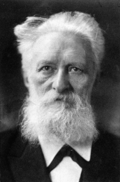
Rudolf Christoph Eucken was a German teacher-like thinker who kept asking how people can live happily and rightly. In many books, such as “The Meaning and Value of Life,” he told readers that the mind and attitude matter most. He taught that earning money or piling up things is less important than growing an honest and active spirit. He also said that what we do every day at school or at home shapes the future. His ideas touched people around the world and earned him the Nobel Prize in Literature. Even today he reminds us that thinking seriously and caring for others are essential.
Related Keywords
Idealism
Idealism is a philosophical stance that locates the ultimate basis of reality in mind or ideas. Classic systems were developed by Kant and Hegel, arguing that thought and value precede matter. Eucken added an element of “activity,” claiming the human spirit has the power to transform the world. This is not pure subjectivism; it stresses actions that realize ideals within history and society. Consequently, it offers rich applications to ethics and education and inspired many later thinkers.
Active Idealism
Active Idealism is Eucken’s own term, holding that the human spirit is not limited to passive contemplation but is a practical energy that improves reality. Here, “truth” is not mere knowledge but something verified through action. The concept transcends deterministic natural science by centering free will and responsibility within philosophy. It later interacted with existentialism and pragmatism. In contemporary social philosophy, it remains a theoretical basis for agency that seeks structural transformation.
Search for Truth
The citation’s phrase “earnest search for truth” refers to Eucken’s lifelong philosophical quest. He valued “living truth” over mere knowledge accumulation, insisting that truth can be confirmed only through practice. This aligns with Socratic dialogue and the Christian witness tradition. While affirming truth as an absolute value, he encouraged learning from diverse historical cultures. Such a stance offers significant insights for today’s dialogical ethics and public philosophy.
Philosophy of Life
Philosophy of Life explores the meaning and purpose of human existence from a practical viewpoint, also seen in Nietzsche or Dilthey. Eucken placed the “lived experience” that natural science often overlooks at the center. He believed the workings of the spirit determine the quality of life and applied theory to practice through educational reform and social work. Consequently, he proposed a framework that integrates personal self-formation with social transformation. This framework plays a pioneering role in today’s life-design studies and well-being discourse.
Ethical Praxis
Ethical praxis is the concretization of moral values through action. Eucken emphasized that it is insufficient to discuss ethics only as ideas; they must be realized within society. In his university courses he assigned public service and self-discipline, linking philosophy with behavior. He reiterated the duty of a “thinking actor” in his Nobel lecture as well. This viewpoint continues to support volunteer movements and civil society theory.