1909 Nobel Prize in Literature
Reason for Award
in appreciation of the lofty idealism, vivid imagination and spiritual perception that characterize her writings
Laureates
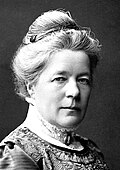
 Sweden
Explanation
Selma Lagerlöf was a Swedish writer best known to children for The Wonderful Adventures of Nils. In her stories she brings animals and nature to life and teaches readers kindness and empathy. The Nobel Prize in Literature is given to the best storytellers of the world. In 1909 Lagerlöf became the first woman to receive this prize. Her win shows that anyone can be recognised around the world if they chase their dreams and keep trying. When you read her books you can feel the joy of imagination and the importance of caring for friends. By opening her pages you too can ride on a wild goose like Nils and travel across distant lands.
Related Keywords
The Wonderful Adventures of Nils
Published in 1906, this children’s book tells the story of a boy named Nils who travels across Sweden on the back of a goose and gradually matures. Commissioned as a geography textbook for Swedish public schools, it seamlessly blends narrative with educational information. Talking animals and spirits introduce a fantasy layer that brings readers closer to nature. The book became an immediate worldwide bestseller and has been translated into more than forty languages. It is still frequently used as material for environmental education and cross-cultural learning.
Nordic Romanticism
Nordic Romanticism was a literary movement that flourished in the late nineteenth and early twentieth centuries in the Nordic countries and emphasised national mythology and the praise of nature. While Lagerlöf is classified within this movement, she developed her own blend by surrounding rural realities with fantasy. The combination of idealistic morality and rich scenic description lifted readers to a higher emotional plane. The movement was closely linked to nation-building processes. Its influence persists in later Nordic fantasy literature and cinema.
First female Nobel literature laureate
In 1909 Selma Lagerlöf became the first woman ever to receive the Nobel Prize in Literature. The achievement was widely reported as a historic breakthrough in a male-dominated society. Her award set a precedent for the international recognition of female authors and inspired later generations. It is frequently cited as a symbolic event within feminist discourse. Even today it stands as an essential reference point when discussing gender and literary awards.
Narrative perspective
Lagerlöf’s stories are noted for adopting the viewpoints not only of humans but also of animals and nature spirits. By employing multiple perspectives she offers readers a multifaceted understanding and deep empathy. Narratology examines her techniques of focalisation as pioneering cases. Switching perspectives expands the fictional world and allows educational information to be woven in organically. Such methods are now widely used in contemporary children’s literature and fantasy works.
Reinterpretation of folk tales
Lagerlöf reconstructed Swedish folk tales and legends by adding new values and moral dimensions. This practice bridged oral tradition and modern written literature. The reinterpreted tales offer readers both regional pride and universal messages. Literary scholarship discusses how her works balance cultural identity with global universality. The approach has influenced authors worldwide in their modernisation of folk narratives.