1912 Nobel Prize in Literature
Reason for Award
primarily in recognition of his fruitful, varied and outstanding production in the realm of dramatic art
Laureates
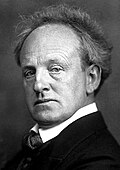
 Germany
Explanation
Gerhart Hauptmann was a writer who created stories for the stage. Instead of kings and princesses, he wrote about ordinary people and their feelings. He showed how factory workers or poor families tried hard to live day by day. His plays include many sad yet warm moments that help the audience sympathize with the characters. When actors speak his lines on stage, viewers feel as if they are really inside that world. Because he wrote so many wonderful plays, Hauptmann received the Nobel Prize in Literature. Even today his works are performed worldwide and make people think about life and society.
Related Keywords
Naturalism
Naturalism was a late-19th-century European literary movement that emphasized scientific observation and held that environment and heredity shape human beings. Based on Émile Zola’s theories, it found a major German exponent in Hauptmann. By discarding ornate rhetoric and using everyday speech and life-sized stage sets, it offered audiences an experience of "the real." Its direct connection between art and social issues profoundly influenced later realistic drama and cinema. Hauptmann’s Nobel recognition owes much to the innovative force of his Naturalist plays.
The Weavers
First performed in 1892, "The Weavers" dramatizes the 1844 Silesian weavers’ uprising. Its innovation lies in dispensing with a single protagonist and portraying the workers as a collective character. Dialect and work songs convey the breath of real life to the audience. Because of its social criticism it faced censorship and ignited debate, setting a precedent for political theatre. The play is still staged worldwide and is regarded as a cornerstone of socially engaged drama.
Dramatic realism
Dramatic realism seeks to reproduce stage events with such accuracy that the audience perceives them as real. Influenced by Naturalism, it highlights details such as lighting, costume, and dialect. Hauptmann placed real kitchen chimneys and genuine work tools on stage, pursuing realism through sight and sound alike. The approach influenced Stanislavski and the American Method tradition. Crucially, realism is not mere imitation but a critical device that makes social structures visible.
Labor unrest
Industrialization in the 19th century worsened working conditions and lowered wages, leading to numerous labor disputes. Hauptmann’s "The Weavers" integrates a symbolic case of labor unrest into literature. The play depicts starvation wages and hunger in concrete terms, forcing audiences to confront economic inequality. It demonstrates that literature can help raise social-movement consciousness. The concept remains frequently cited in contemporary labor-literature studies.
German Empire period
The German Empire, lasting from 1871 to 1918, pursued rapid industrialization and colonial policy. Domestically, class tensions rose with the growth of the Social Democratic Party and labor movements. In literature, Naturalism and early Expressionism flourished, with Hauptmann at their core. Because state censorship existed, dramatists used subtle hints and symbols to voice social critique. The era forms an essential prehistory for understanding Weimar-period culture.
Silesia
Silesia is a historical region spanning present-day southwest Poland, parts of the Czech Republic, and Germany. In the 19th century its weaving industry was flourishing but workers lived precariously. Hauptmann was born in this area, and it forms the setting of "The Weavers." Local dialect and landscape deeply influence his language and imagery. The plays provide an excellent case for interpreting literature through regional history.
Dialect
Dialect is a regional form of speech with its own vocabulary and pronunciation; using it in literature can reveal characters’ social backgrounds. Hauptmann faithfully reproduced Silesian dialect, bringing the local atmosphere to the audience. While realism increased, staging became harder and translators needed linguistic creativity. Dialect use also makes social class distinctions visible. It remains a key topic in contemporary sociolinguistics.
Nobel Prize in Literature
Founded in 1901, the Nobel Prize in Literature is an international award established by Alfred Nobel’s will. It is given annually to an author with outstanding literary achievement. The committee considers not only artistic quality but also benefit and influence on humankind. Hauptmann received the prize in 1912, becoming one of the early dramatists to be honored. His award increased international recognition of German-language literature and demonstrated that drama can merit Nobel consideration.