1915 Nobel Prize in Literature
Reason for Award
as a tribute to the lofty idealism of his literary production and to the sympathy and love of truth with which he has described different types of human beings
Laureates
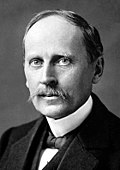
 France
Explanation
Romain Rolland was a French writer who loved to tell stories. He believed every person, no matter where they come from, is important, and he wrote his characters kindly, like family or friends. His books teach us that "everyone is different and that is great." During World War I, he bravely said that fighting between nations was sad and wrong. Because he kept standing up for peace and showed strong ideals, he received the Nobel Prize. His words still touch people all over the world today.
Related Keywords
Jean-Christophe
Written between 1904 and 1912, this novel cycle follows fictional composer Jean-Christophe, using his life to explore an artist’s development amid Europe’s conflicts. Rolland weaves musical rhythm into prose to mirror the protagonist’s inner struggle and the spirit of the age. Themes of multicultural coexistence and cross-border friendship underscore a plea for peace on the eve of World War I. The work’s diverse characters and relentless self-transcendence embody the idealism and empathy cited by the Nobel committee. It remains a seminal example of internationalist perspective in twentieth-century literature.
pacifism
In his 1914 essay ‘Above the Battle,’ Rolland argued that one must follow personal conscience rather than nationalist frenzy. He advocated international solidarity and dialogue among intellectuals to stop war. Though branded a traitor at the time, his stance was later praised as humanitarian courage. It exemplifies how writers can intervene in politics and influence public opinion. Pacifism thus illustrates the Nobel criterion of benefiting humankind.
people’s theatre movement
Rolland sought to transform theatre from an elite pastime into a space for popular education and community. In his 1895 manifesto ‘The People’s Theatre,’ he proposed publicly funded venues with low ticket prices. Alternating classical and contemporary plays, the program would enable audiences to learn history and engage social issues simultaneously. The idea influenced French national theatre policy and post-war avant-garde movements. It anticipates today’s debates on social inclusion through the arts and remains a central topic in Rolland scholarship.
idealism
Rolland’s idealism pursued both personal spiritual growth and social harmony. Linking art with ethics, it shares lineage with Tolstoyan thought in its faith in human potential. His works repeatedly depict protagonists who refuse to abandon hope amid hardship. Even in wartime essays he tried to apply moral ideals to real-world politics. The Nobel Prize explicitly honored this ‘lofty idealism.’
humanism
Rolland was a humanist who placed human dignity and mutual understanding above all else. He stressed a shared ‘humanity’ that transcends religion and ethnicity, making dialogue the cornerstone of peace. His narrative technique of intersecting diverse viewpoints functions as training in understanding others. This remains instructive for today’s multicultural societies and explains why his works are still taught in schools. The Nobel citation’s reference to ‘sympathy and love of truth’ matches the very heart of humanism.
roman-fleuve
Literally “river-novel,” a multi-volume narrative that spans generations. Rolland’s ‘Jean-Christophe’ is a canonical example. It continuously records character development and historical change, allowing readers to experience social evolution over time. In early twentieth-century French literature it offered a new model of social novel. Interdisciplinary studies discuss its representation of time and its relationship with serialized publication.
World War I
The global conflict fought mainly in Europe from 1914 to 1918. Rolland gained international attention for opposing the war. He foregrounded the question of ‘intellectual responsibility in wartime,’ which remains central to studies of literature and politics. His pacifist ideas influenced the League of Nations and interwar cultural diplomacy. Scholars now revisit him as a model for authors speaking out on global issues.