1916 Nobel Prize in Literature
Reason for Award
in recognition of his significance as the leading representative of a new era in our literature
Laureates
 Sweden
Explanation
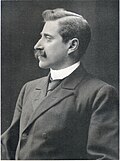
Verner von Heidenstam was a Swedish writer who created lively poems and stories about his country’s nature and history. When you read his books, you can almost see forests, lakes, and brave soldiers jumping off the pages. In his time, many writers liked to describe everyday life just as it was, but Heidenstam loved dream-like adventures filled with pride and beauty. Reading him is like turning the pages of a picture book that carries you to distant times. His fresh style cheered people up and enriched Sweden’s culture. The Nobel Prize in Literature was given to let the whole world know about this special talent.
Related Keywords
National Romanticism
National Romanticism was a late-19th-century Nordic movement that idealized a people’s history, nature, and folklore to reinforce cultural identity. Heidenstam stood at its very center, poetically re-composing historical facts to spark collective imagination. Whereas Naturalism analyzed urban realities, he portrayed rural landscapes and royal lineages, stressing spiritual solidarity within the community. Critics warned that such literature could slide into political propaganda, yet it also energized cultural autonomy in the Nordic countries. His style influenced later poets in Norway and Finland and helped make National Romanticism known internationally.
Swedish history
Heidenstam wove episodes from the 13th-century Folkungs to the age of Charles XII in the 18th century, covering multiple centuries of Swedish history. While practicing source criticism, he also used poetic license to keep the narrative fluid yet atmospheric. Through his texts, readers experience the rise and fall of the Baltic empire and the social changes after the Reformation, gaining insight into nation-building dynamics. For early-20th-century audiences undergoing rapid modernization, his novels served as a dialogue between past and present. His manner of blending fact and fiction is regarded as a forerunner of the contemporary historical novel.
“Vallfart och vandringsår”
Published in 1888, this debut poetry collection channels impressions from travels in the Orient and the Mediterranean into a uniquely rhythmic Swedish idiom. Symbolist colors, nature imagery, and religious metaphors intersect to deliver both exoticism and spirituality to readers of the time. It invigorated a generation tired of Naturalist prose and dramatically widened the formal horizons of Swedish poetry. The travel motif functions on two levels—self-exploration and cross-cultural comparison—and strongly influenced later Modernist verse. Its blurring of the line between poetry and prose is considered a milestone in the metrical history of Nordic literature.
“Karolinerna”
Published in two parts between 1908 and 1910, “The Charles Men” recounts the campaigns and homecoming of soldiers serving King Charles XII. It intertwines stringent military discipline with the soldiers’ human conflicts, blending epic narrative with psychological novel elements. By juxtaposing the brutality of the Great Northern War and the ideals of homeland defense, the book exposes both the light and shadow of patriotism. Appearing on the eve of World War I, it prompted readers across Europe to reconsider militarism. Linguistically, the novel mixes archaic vocabulary with colloquial rhythms, heightening its historical immediacy.
“Folkunga Trädet”
This historical cycle, published 1905–07, centers on the 13th-century Folkungs, depicting struggles for royal power and social change. Alternating between annalistic chapters and symbolic scenes, it contrasts political history with details of popular life in a state of tension. Drawing on charters and legends, Heidenstam adds a Romantic flair to character portrayal, fostering reader empathy. The conflicts of bloodline and duty mirror contemporary Swedish debates on democratization, turning the novel into a historical looking-glass. It remains a staple text in Nordic historiographic literary studies.
Literary Renewal Movement
In 1890s Sweden, the “Literary Renewal Movement” arose as a reaction against Realism and Naturalism, with young authors vying to innovate form and theme. As its spiritual leader, Heidenstam argued in lectures and essays that “poetry must not be a slave to fact,” urging a synthesis of Symbolism and Romanticism. The movement liberalized poetic form and re-evaluated historical subjects, helping propel Nordic literature onto the international stage. Writers such as Selma Lagerlöf and Pär Lagerkvist were influenced, accelerating the diversification of Swedish letters. Heidenstam’s Nobel Prize symbolically marked global recognition of the movement’s achievements.