1920 Nobel Prize in Literature
Reason for Award
for his monumental work, Growth of the Soil
Laureates
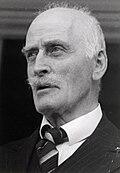
 Norway
Explanation
Knut Hamsun was a writer from Norway. He wrote a story called “Growth of the Soil” about a couple who build a farm deep in the mountains. The book shows the beauty of nature and the joy of working with the earth in simple words. Readers felt the happiness of living close to the land. Because of this, Hamsun received the Nobel Prize in Literature.
Related Keywords
Growth of the Soil
Hamsun’s masterpiece that secured the 1920 Nobel Prize. Through the struggles of the settler Isak it re-examines the value of living with nature. The farming cycle shapes the narrative architecture, turning rhythms of labor and seasons into literary devices. Amid early-20th-century urbanization it offered a counter-vision of return to land. The novel is continually reinterpreted through eco-critical and post-humanist lenses.
Norwegian modern literature
The literary current from the late 19th to early 20th century in Norway, in which Hamsun followed Ibsen and Bjørnson but introduced radical innovations. Themes revolve around countryside, nature, and national identity while shifting focus toward interior psychology. Strong linguistic awareness linked to nation-building led to the use of dialects and archaisms. It anticipated modernist techniques while expanding realism’s framework. Internationally it ranks with authors such as Kafka and Lawrence in laying the groundwork for 20th-century fiction.
psychological realism
A method Hamsun solidified in works such as Hunger and Growth of the Soil. It privileges streams of consciousness and subtle emotions over external action. Readers thus experience the protagonist’s inner life firsthand, and narrative momentum comes from interior change rather than plot events. The approach is regarded as a forerunner to 20th-century modernist interior monologue and stream of consciousness. It remains central in literary psychology and cognitive criticism.
agrarianism
A philosophy that views land and the farmer as society’s foundation. In Growth of the Soil farming labor brings spiritual fulfillment and community cohesion. It offers a critical stance toward industrialization, suggesting a utopian return to the countryside. The idea influenced 20th-century environmental thought and localization movements. Critics note potential links to conservatism and exclusionary nationalism.
stream of consciousness
A narrative technique that records a character’s thoughts and sensations in a linked, often illogical sequence. Hamsun employed it distinctly in Hunger and alternates inner monologue with objectivity in Growth of the Soil. It is considered an early form of the method later refined by Joyce and Woolf. The technique heightens reader immersion and conveys subjective perceptions of time and space. It is also a focus in interdisciplinary studies between cognition and literature.
Nobel Prize in Literature
An international award established in 1901 by Alfred Nobel’s will. Each year it honors one or more authors with outstanding literary achievements. The laureate is chosen by the Swedish Academy and the prize often signals major currents in world letters. Hamsun’s 1920 award exemplified global recognition of literature that re-examines human–nature relations. In recent years discussion has also focused on diversity and linguistic representation in the selection process.