1921 Nobel Prize in Literature
Reason for Award
in recognition of his brilliant literary achievements, characterized as they are by a nobility of style, a profound human sympathy, grace, and a true Gallic temperament
Laureates
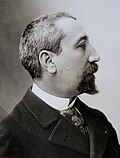
 France
Explanation
Anatole France was a writer who lived in France about a hundred years ago. His books are written in beautiful but easy-to-read language instead of difficult words. In his stories, rich and poor people—and sometimes even animals—are treated with the same respect. While reading you begin to feel kindness and sympathy for everyone. The Nobel Prize in Literature was given to him as a reward for creating many such gentle and wonderful tales. If you look for books like “Penguin Island” at the library, you may make an exciting discovery.
Related Keywords
nobility of style
Anatole France’s prose inherits the concision and balance of the 17th-century French classicists. The placement of commas and periods creates a rhythm that sounds almost musical when read aloud. His rhetoric never slips into ornament for its own sake, yet it envelops a lingering irony that sustains an elevated tone. This sense of equilibrium offered an antithesis to the rough language favoured by contemporary naturalists. The Nobel Committee singled out this “nobility of style” as a summit of modern French prose.
profound human sympathy
In France’s works, even marginalized people and animals receive a warm gaze. He advocates morality not through sermons but through humor and gentleness that stand beside the reader. In “The Crime of Sylvestre Bonnard,” the erudite old scholar’s struggle to rescue an orphan vividly portrays the human conscience. This universal empathy continues to captivate readers across borders and eras. The Nobel Prize recognized his compassionate insight as an embodiment of literature’s power to heal and understand.
Gallic temperament
The “true Gallic temperament” cited by the Nobel Committee refers to the French penchant for wit, freedom of spirit, and affectionate irony. Anatole France’s pen deftly blends history with myth, provoking laughter and reason in equal measure. The political satire in “Penguin Island” is its clearest manifestation. He embodied the French esprit that avoids solemnity yet never misses the point. This trait makes his works accessible and enjoyable to readers worldwide.
satire
Anatole France is renowned as a master satirist, particularly for his light-footed critiques of religious and political authority. His satire is not venomous; instead, it employs fable and humor to let readers discover insights themselves. “The Gods Are Athirst” exposes the madness of revolution, while “Thaïs” reveals the hypocrisy of asceticism. Such satire illuminates serious issues behind the laughter and invites debate. It is studied today as a technique closely related to contemporary social satire.
Dreyfus Affair
France supported the innocent officer in the 1890s Dreyfus Affair, becoming a pioneer of social activism among intellectuals. He endorsed Émile Zola’s “J’Accuse…!” and signed public letters demanding justice. This stance is valued as a practical example of a writer taking a moral position in the public sphere. It remains a key case study for examining the intersection between literature and political action. The Nobel Committee implicitly honored this defence of fairness and reason along with his literary work.
Penguin Island
“Penguin Island” (1908) is a novel that parodies French history through the absurd premise of penguins becoming humanized. The story follows the penguins as they found a state and repeatedly engage in power struggles. Readers laugh while gaining insight into real mechanisms of religious reform and revolution. Its high degree of allegorical flexibility makes it useful even as supplementary material in political science and history courses. The work is internationally read as a quintessential expression of France’s satirical spirit.